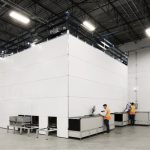

Warehouse slotting is the process of deciding which location each SKU lives in, so pickers walk less and pick faster. Fast movers go near the front at waist height, and slow movers go farther back or higher up. The catch is that demand keeps changing, so a good slotting plan goes stale and the building has to be re-slotted again and again. A cube storage system with direct robot access to every bin removes most of that work, because no location is farther from the operator than any other.
This guide covers how warehouse slotting works, why re-slotting never ends in a manual building, and what changes when the product comes to the picker.
In this article
- What warehouse slotting is and why it matters
- Why warehouse slotting never stays done
- How cube storage changes warehouse slotting
- What ending warehouse slotting changes for your team
- When warehouse slotting still matters
- Questions to ask before your next re-slot
- Warehouse slotting FAQ
- See it in person
What warehouse slotting is and why it matters
In a person-to-goods warehouse, pickers walk to the product. Every step between picks is time nobody gets paid to produce. Slotting tries to shorten those steps by putting the right SKU in the right place.
A slotting plan usually weighs four things:
- Velocity: how often a SKU is picked. Fast movers earn the best spots.
- Size and weight: heavy items go low, and bulky items need larger slots.
- Affinity: items that are often ordered together sit near each other.
- Ergonomics: the most-picked items sit in the "golden zone" between knee and shoulder height.
When the plan is good, travel time drops and picks per hour go up. Our comparison of order picking methods shows how much of a manual picker's day goes to walking, which is the cost slotting attacks.
Common warehouse slotting methods
Most teams start with ABC slotting. They rank SKUs by picks, put the A items closest to packing, and push C items to the back. Some add affinity rules, so a phone case sits next to the matching screen protector. Larger operations run slotting software that scores every SKU and suggests moves each week or month.
All of these methods share one assumption: location matters, because a person has to walk to it.
Why warehouse slotting never stays done
A slotting plan is a snapshot of demand on the day it was built. Then demand moves.
Demand shifts with seasons and promotions
A product that sold slowly in summer becomes a top seller in November. A promotion turns a C item into an A item for two weeks. Each shift leaves fast movers in slow spots and slow movers in prime spots. As a result, travel time creeps back up.
New SKUs break the warehouse slotting plan
New products arrive with no sales history. Someone has to guess where they go, and that guess is often wrong. Meanwhile, the prime locations are already full.
Warehouse slotting moves cost labor and throughput
Moving a SKU means pulling the stock, moving it, updating the record, and often moving whatever was in the new slot first. In a large building, a re-slot can take crews off the pick line for days. The work usually happens on nights or weekends, or it gets skipped. Our article on warehouse throughput covers how replenishment and re-slotting drag on output during peak.
Moves create record errors
Every move is a chance to put stock in the wrong place or skip a scan. So a re-slot meant to save time can leave pickers arriving at empty slots.
More SKUs make the problem worse
Warehouse slotting gets harder as the catalog grows. With a few hundred SKUs, a supervisor can keep the plan in their head. With 15,000, nobody can. Prime locations also run out, because there are only so many slots near packing at waist height.
How cube storage changes warehouse slotting
In a goods-to-person system, the product comes to the worker. MHI notes that this removes the walking between picks. Once nobody walks, most of the reason for slotting goes away.
Direct access to every bin
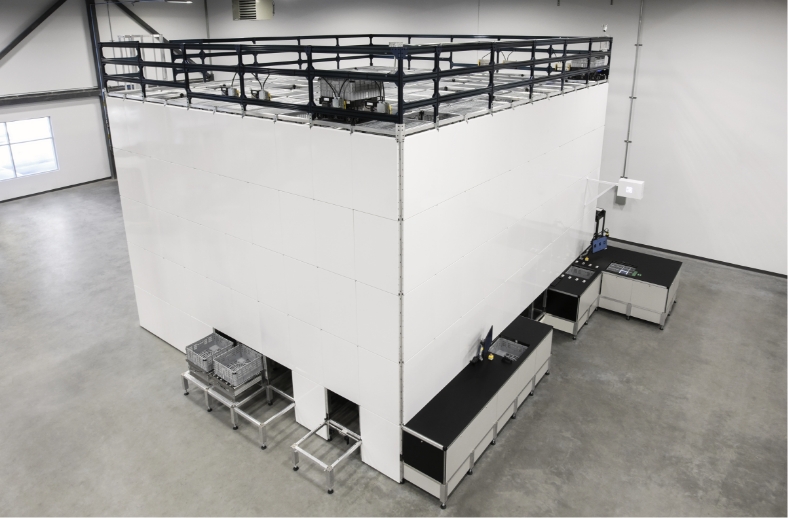
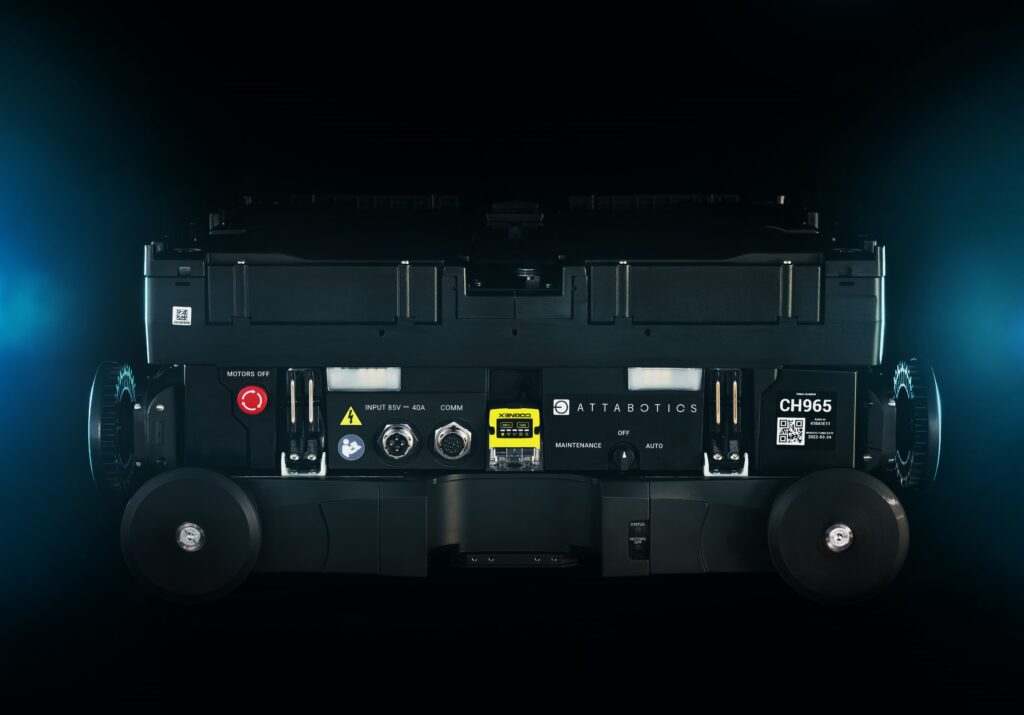
Attabotics robots travel horizontally and vertically inside the Cubic Storage Structure. Each robot has direct access to every storage location, so any bin reaches an operator in under 90 seconds, wherever it sits. Attabotics describes this as direct access "with no need for complex slotting logic."
That is the key difference from other storage. In a stacked grid, bins near the bottom must wait while the robot digs out the bins above them. Teams then have to manage which bins sit on top. In a 3D structure, the robot drives straight to the bin, so a slow mover buried in a corner and a fast mover near the station both come out without digging.
No golden zone to fight over
The operator always works at the same station height. Every SKU arrives in the golden zone, because the robot presents the bin at the workstation. So ergonomics stop being a slotting rule.
New SKUs go in without a plan
When a new product arrives, it is decanted into a bin at a workstation and the bin goes into the structure. No one has to find it a prime slot or move something else out of the way. Attabotics workstations handle replenishment, putaway, picking, decanting, cycle counts, and kitting from the same touchscreen.
Bins sized to the SKU
Attabotics bins come in two sizes, with up to 16 custom compartments and up to 45 kg per bin. Small SKUs share a bin in separate compartments. Heavier items still need the right bin, but they don't need a low shelf near the dock.
What ending warehouse slotting changes for your team
Removing the re-slot project frees people and time.
Labor goes back to picking
Crews that used to move stock at night can work the pick line instead. Attabotics reports up to 75% less labor than traditional fulfillment. Pan Pacific Pet, which runs 15,000 SKUs in 6,000 bins with 10 robots and 4 workstations, cut picking labor by 75%, from 20 pickers to 5.
Peak season doesn't need a new plan
When demand shifts, the software sends robots to whatever bins the orders need. Throughput depends on robots and workstations instead of where stock happens to sit. Each Node X workstation presents 300 to 400 bins per hour. Robots and workstations can be added without stopping the system, so capacity can grow for peak.
Records stay cleaner
Robots move each bin between storage and the workstation, so staff don't carry stock between floor locations and miss a scan. Fewer moves means fewer chances for the record and the bin to disagree.
Large catalogs stay manageable
Modern Beauty Supplies holds more than 12,000 SKUs across 98,000 storage locations in its Attabotics system. More than 95% of its picking is automated, and picking labor fell 84%. Slotting a catalog that size by hand would be a standing job. In the cube, each of those locations is reachable in the same way.
When warehouse slotting still matters
Cube storage doesn't remove every placement decision in the building.
- Items outside the structure. Pallets, long goods, and oversized items still live in racking, and that racking still benefits from good slotting.
- Bin assignment. Someone still decides which SKUs share a bin and which bin size each one needs.
- Workstation planning. The number of stations and their placement set how fast orders leave, so plan them around peak volume.
For most of the each-pick inventory, though, location stops being a lever, because every bin is equally close.
Questions to ask before your next re-slot
If your team is planning another warehouse slotting project, ask these first:
- How many labor hours did the last re-slot take, and how long did it hold?
- What share of a picker's shift is walking?
- How many SKUs are you adding each year, and where will they go?
- Do you have room for more prime locations, or are they already full?
If the answers point to a re-slot every season, it may cost less to change how picking works than to keep moving stock. See how the technology works, or compare picking approaches in our guide to order picking methods.
Warehouse slotting FAQ
Warehouse slotting is the process of assigning each SKU to a storage location based on how often it is picked, its size and weight, and what it is ordered with. The goal is to cut picker travel and make each pick faster and safer.
Many warehouses re-slot when demand shifts enough that fast movers sit in slow locations, often before peak season or after big catalog changes. Each re-slot takes labor and creates moves that can cause record errors, so teams try to limit how often they do it.
In a 3D cube system with direct robot access to every bin, location matters far less because every bin reaches the workstation without digging. Teams still decide bin sizes and which SKUs share a bin, but they don't need to keep moving fast movers to prime spots.
Dynamic slotting means updating SKU locations often, sometimes daily, as demand changes. It keeps travel low but adds frequent moves. Goods-to-person systems avoid most of those moves because the robot brings the bin to the operator.
See it in person
The fastest way to judge whether cube storage would end your re-slot cycle is to watch one run. Book a site tour to see Attabotics workstations and robots working a live SKU mix.