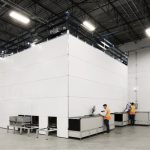

Warehouse kitting is the work of pulling several separate items and packing them together as one unit, called a kit. A subscription box, a gift set, a repair kit, and a bag of parts for an assembly line are all kits. Most warehouses build them on a dedicated kitting line, with pickers walking the aisles to gather each component. An automated goods-to-person system can build the same kits at its regular workstations instead, because it brings every component bin to the operator.
This guide explains the kitting process, where manual kitting slows down, and how automated workstations handle warehouse kitting without a separate line.
In this article
- What is warehouse kitting?
- The kitting process, step by step
- Where manual warehouse kitting slows down
- How automated workstations handle warehouse kitting
- The operator at the station
- Warehouse kitting results to compare against
- Is automated warehouse kitting right for you?
- Warehouse kitting FAQ
- See kitting at the workstation
What is warehouse kitting?
A kit is a group of SKUs that ship or get used together. Once packed, the kit usually carries its own SKU. For example, a skincare brand might sell a cleanser, toner, and moisturizer as one starter set. The warehouse stores three items but ships one.
Warehouse kitting shows up in many operations:
- Ecommerce and retail. Bundles, gift sets, sample packs, and subscription boxes.
- Manufacturing. Parts kits sent to an assembly line, so workers have everything for one job in one tote.
- Service and repair. Field-service kits with every part a technician needs for one call.
- 3PLs. Kitting as a value-added service for brand clients.
Kitting vs. assembly
People often mix up kitting and assembly. Kitting groups finished items in one package, and nothing gets built. Assembly joins parts into a new product. A box with a phone, a cable, and a charger is a kit. In contrast, a phone made from a screen, board, and battery is an assembly. Many warehouses offer both, and kitting often feeds the assembly step.
The kitting process, step by step
The steps are similar in most buildings, whatever the product.
- Define the kit. The bill of materials lists each component SKU and its quantity.
- Release the work. The WMS or order system creates kitting orders, either ahead of demand or as customer orders arrive.
- Gather the components. Pickers collect each item from storage.
- Build and check. An operator places each component in the kit, then verifies count and contents.
- Pack and label. The finished kit gets its packaging and its own SKU label.
- Store or ship. Kits built ahead of demand go back into storage. Kits built to order go straight to shipping.
Pre-kitting vs. kit-to-order
There are two ways to time the kitting process. With pre-kitting, the warehouse builds kits in advance and stores them as finished goods. This works well for steady sellers, but it ties up inventory and space in kits that might not sell. With kit-to-order, the warehouse builds each kit when an order arrives. Inventory stays flexible, so the same components can serve several kits. However, picking speed then limits how fast kits ship.
Where manual warehouse kitting slows down
Kitting multiplies picking work. One kit with six components means six picks before anything ships. As a result, the usual picking problems hit kitting harder.
Travel between components
In a manual building, the picker walks to every component. Since kit components rarely sit side by side, one kit can mean a long route. MHI notes that goods-to-person systems remove that walking between picks.
Kitting lines take floor space
Many warehouses set up a separate kitting area with tables, shelving, and staged stock. That space often sits idle between projects. Meanwhile, the components still need replenishing from main storage.
Errors cost the whole kit
A missing or wrong item spoils the entire kit. Someone has to find the error, rebuild the kit, and sometimes reship it. Look-alike components, such as two sizes of the same fitting, make warehouse kitting errors more likely.
Kits change often
Promotions, seasonal bundles, and new product versions change the bill of materials. Each change can mean re-slotting components and retraining staff. During peak season, that churn competes with regular order picking.
How automated workstations handle warehouse kitting
A goods-to-person system flips the model. Robots bring each component bin to a fixed workstation, the operator takes what the screen shows, and the bin returns to storage. Consequently, the walk disappears, and so does the separate kitting line.
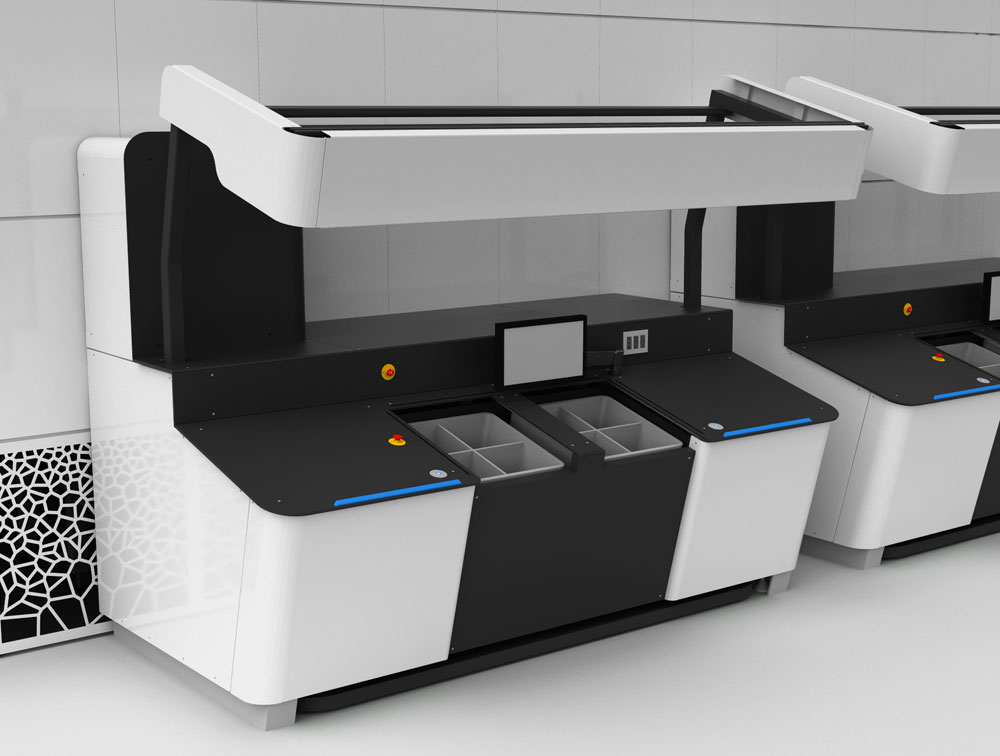
On the Attabotics system, every workstation can run kitting. Operators switch the station between picking, decanting, cycle counts, and kitting by selecting the mode on the touchscreen. So the same station that picks ecommerce orders in the morning can build kits in the afternoon.
Every component arrives on request
Attabot robots travel horizontally and vertically inside the Cubic Storage Structure at 2.7 m/s. They reach every storage location directly, without digging through stacked bins. As a result, any bin reaches an operator in under 90 seconds, wherever it sits. For kitting, that matters because a slow-moving component arrives as quickly as a fast one.
Direct access also removes the need to slot fast movers in prime locations. Components for a new bundle don't need a re-slot project before kitting starts.
Bins built for small parts
Bins come in two sizes, with up to 16 custom compartments and up to 45 kg per bin. Compartments let one bin hold several small components, such as fasteners or sample sizes. That keeps dense parts storage from turning into hundreds of half-empty totes.
Software sequences the work
Kitting depends on getting components in the right order. Attabotics Software batches picks across multiple orders. According to the 2023 ASRS trends report, the software can also group orders of similar composition and move high-priority orders ahead of older ones. For kit-to-order work, that means a rush kit can still make the truck.
Kits leave the station ready to ship
Any order can be completed at any station, and stations handle pick, pack, and ship in one flow. Therefore, a kit-to-order kit can go straight from the workstation to shipping.
The operator at the station
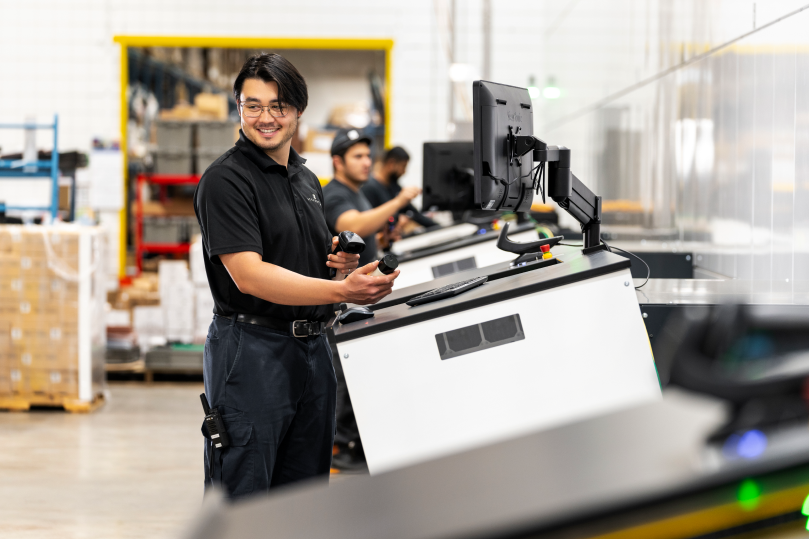
Kitting means many touches per order, so the station design affects output. The Node X workstation averages 300 bin presentations per hour, and up to 400 once fully optimized. In addition, its pick port tilts 15 degrees for better visibility, and a stowable foot platform fits operators of any height. Less bending and reaching means less fatigue over a long kitting shift.
Warehouse kitting results to compare against
Attabotics reports up to 75% less labor and up to 85% less space than traditional racking. Customer results on picking show what that looks like on a real floor:
- Modern Beauty Supplies reports an 84% reduction in picking labor, with more than 95% of picking automated.
- SCI, a third-party logistics provider running the system since 2019, picks 65% more units per hour in 70% less space.
Those are picking results, not kitting results. Still, kitting is mostly picking. Fewer steps per component lead to faster kits.
Is automated warehouse kitting right for you?
Automated kitting fits best when kits make up a steady share of your volume, or when bundles change often. It also fits when kitting competes with regular picking for the same labor. Before you talk to a vendor, gather these numbers:
- Kits built per day, at normal volume and at peak.
- Average components per kit, and how many kits share components.
- How often the bill of materials changes.
- Your split between pre-kitting and kit-to-order.
- Kit error rate and what each rework costs.
For parts-heavy kitting, our guide to automated parts storage covers bin weights and dense small-part storage. For a wider view, compare order picking methods or read how goods-to-person picking works.
Warehouse kitting FAQ
Warehouse kitting means gathering separate items and packing them as one unit with its own SKU. Common examples include gift sets, subscription boxes, repair kits, and parts kits for an assembly line. The warehouse stores the components separately and ships the finished kit.
First, define the kit's components. Next, release kitting orders, gather each component, build the kit, and check it. Finally, pack and label it. Kits built ahead of demand go back into storage, while kit-to-order kits go straight to shipping.
Kitting groups finished items in one package, and nothing gets built. Assembly joins parts into a new product. For example, a phone with a cable and charger in one box is a kit. The phone itself, made from a screen and battery, is an assembly.
Yes. On the Attabotics system, every workstation can switch to a kitting mode on the touchscreen. Robots bring each component bin to the operator in under 90 seconds, so no separate kitting line is needed.
See kitting at the workstation
Kitting makes more sense when you watch component bins arrive at a station in sequence. Book a site tour to see the system running, or explore the technology behind it.