

Inventory accuracy is how closely your system records match the stock that is physically on hand. When the record says a bin holds 12 units and it holds 12, that location is accurate. Low inventory accuracy causes short picks, oversold orders, and emergency counts. Automated storage helps because every bin comes to a workstation, so operators can count stock where they already pick, without stopping the operation.
This guide covers how to measure inventory accuracy, why it slips in manual warehouses, and how cycle counting works inside an automated storage system.
In this article
- What inventory accuracy means
- Why inventory accuracy slips in a manual warehouse
- Cycle counting vs. a full physical inventory
- How automated storage improves inventory accuracy
- Inventory accuracy and labor
- How to improve inventory accuracy before you automate
- Inventory accuracy FAQ
- Talk to us about your counts
What inventory accuracy means
Your warehouse management system (WMS) holds a record for every SKU and location. Inventory accuracy compares that record with a physical count. If the two match, the location counts as accurate. If they differ, you have a variance to investigate.
Most operations track accuracy in one of three ways:
- Location accuracy: the share of counted locations where the record matches the count.
- SKU accuracy: the share of counted SKUs whose total on hand matches the record.
- Unit or value accuracy: how far the counted units or dollars differ from the record.
Each method tells a different story. Location accuracy shows whether pickers can trust the slot. Unit and value accuracy show what the errors cost. For that reason, many teams report location accuracy weekly and value accuracy at month end.
Inventory accuracy vs. order accuracy
The two are linked but different. Order accuracy asks whether the customer got the right items. Inventory accuracy asks whether the stock record is right before anyone picks. A wrong record causes wrong orders, and wrong picks then corrupt the record again. Our article on what a mispick actually costs covers the order side.
Why inventory accuracy slips in a manual warehouse
Most inventory errors start with people walking aisles and touching product. Here are the common causes.
Picks from the wrong slot
A picker grabs from the slot next to the right one. The order ships wrong, and two records are now off at once.
Putaway errors
Receiving staff put stock in the wrong location, or into the right location without a scan. As a result, the product exists but the system can't find it.
Miscounts at receiving
A carton holds 24 units, but the receipt says 20. That error then follows the SKU until someone counts it.
Unrecorded moves
Staff consolidate half-empty slots or pull stock to a pick face and skip the scan. The record stays where the stock used to be. Later, a picker arrives at an empty slot while the product sits two aisles away. Then the order waits while someone searches.
Damaged stock left in the record
A unit gets crushed, opened, or expires on the shelf. Someone sets it aside, but nobody adjusts the record. The system still shows it as available, so the next order for it shorts. Over time, these small gaps add up, especially on fast movers that get handled most.
Counts that interrupt the work
Full physical counts often mean shutting down picking for a day or a weekend. Because counts are costly, teams run them less often, and errors build up between counts.
Cycle counting vs. a full physical inventory
A full physical inventory counts everything at once, usually with the building closed. Cycle counting instead counts a small set of locations every day or week, so the whole building gets counted over time.
Cycle counting has two advantages. First, it finds errors sooner, while the cause is still traceable. Second, it spreads the work out, so nobody has to stop shipping.
ABC cycle counting
Many warehouses rank SKUs by how much they move or what they're worth. Fast movers and high-value items (A items) get counted most often. Slow movers (C items) get counted less often. This puts counting effort where errors cost the most.
Still, in a manual warehouse, every count means walking to a location. Each count competes with picking for the same labor and the same aisles. That is why counts slip when volume rises, which is exactly when accuracy matters most.
How automated storage improves inventory accuracy
In a goods-to-person system, the product comes to the worker. MHI notes that this removes the walking between picks. For inventory accuracy, it changes something else too: stock sits inside the structure, and it leaves only at a workstation.

Every bin comes to a fixed station
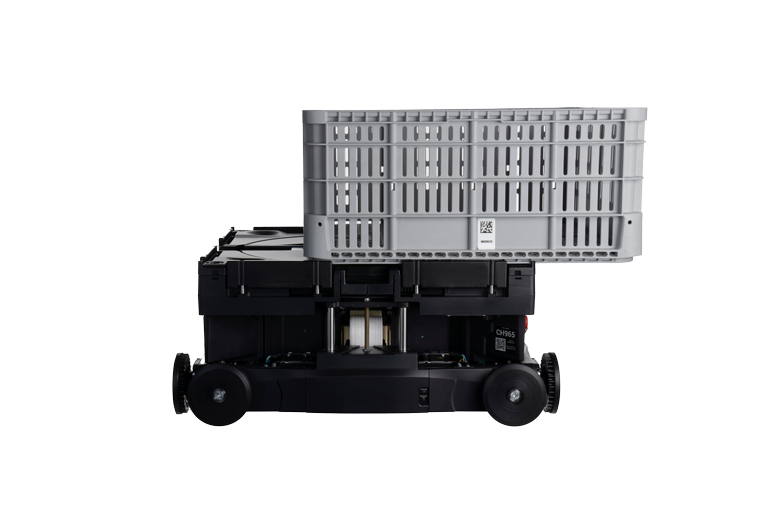
Attabotics robots travel horizontally and vertically inside the Cubic Storage Structure, with direct access to every storage location. Any bin reaches an operator in under 90 seconds. So a count never needs a walk, a ladder, or a forklift. The operator counts at the same screen they pick from.
Cycle counts at the same workstation
Attabotics workstations handle picking, decanting, cycle counts, and kitting. Operators choose the mode on the touchscreen. That means a team can run cycle counts between pick waves, or during a quiet shift, without stopping the system. Meanwhile, other stations keep picking.
Fewer touches, fewer errors
Every touch is a chance for an error. In a cube system, the robot handles the move from storage to station, so staff don't put away or pull stock in the aisles. The software tracks each bin as it moves. In addition, Attabotics bins hold up to 16 custom compartments, which keeps small SKUs apart inside one bin.
Software that ties counts to the WMS
Attabotics Software includes intelligent inventory management and an integration API for WMS connectivity. Its communications layer can talk to any host system, as long as the interface is specified. That way, count results update the record your order system uses. For how the connection works, read how an ASRS integrates with your WMS.
Inventory accuracy and labor
Counting takes labor, and labor is already short. Attabotics reports up to 75% less labor than traditional fulfillment. Some of that time can go to counts that used to get skipped.
Modern Beauty Supplies shows the scale involved. Its Attabotics system holds more than 12,000 SKUs across 98,000 storage locations. It cut picking labor by 84%, and more than 95% of its picking is automated. At that size, a walking cycle count program would take a large crew. Counting at the station keeps it manageable.
Accuracy also pays off after the order ships. Attabotics' 2023 automation e-book notes that automation improves order accuracy, which means fewer returns. Good inventory records are where that starts. To see how stations fit into a full goods-to-person flow, read our guide to goods-to-person picking.
How to improve inventory accuracy before you automate
You don't need new equipment to start. These steps help in any warehouse:
- Measure first. Pick one accuracy method and report it every week.
- Count by ABC class. Count fast movers and high-value SKUs most often.
- Find the cause. When a count is off, trace the last receipt, putaway, and pick.
- Scan every move. Make unscanned moves the exception, not the habit.
- Plan for automation. Ask vendors how counts happen, how variances get resolved, and how results reach your WMS.
Those answers show whether a system will keep your records right as volume grows. Also, keep your current accuracy numbers. They become the baseline for judging the new system after go-live.
Inventory accuracy FAQ
Inventory accuracy measures how closely your system records match the stock physically on hand. Most warehouses track it by location, by SKU, or by units and value. It is usually checked through cycle counts or a full physical inventory.
Count a set of locations, then divide the number that match the system record by the total counted. Multiply by 100 for a percentage. Some teams also compare counted units or value against the record to see what the errors cost.
Robots bring each bin to a fixed workstation, so nobody walks the aisles to count. Operators run cycle counts at the same station they pick from. As a result, counts can happen between pick waves instead of during a shutdown.
Yes. In an automated storage system, one station can run cycle counts while others keep picking. Attabotics workstations switch between picking, decanting, cycle counts, and kitting on the touchscreen.
Talk to us about your counts
If counts keep pulling people off the pick line, contact Attabotics to talk through your SKU profile, or see how the technology works.