
Order picking is the warehouse step where workers or machines pull the items for each customer order out of storage. Most operations use one of five order picking methods: piece picking, batch picking, zone picking, wave picking, or goods-to-person. The methods differ in three ways. They change who travels, how orders get grouped, and when work is released to the floor.
Picking is also where most warehouse labor goes. This guide compares the five methods, shows where each one breaks down, and explains how to choose the right fit for your order profile.
In this article
- What is order picking, and why does the method matter?
- The five order picking methods at a glance
- Piece picking (discrete order picking)
- Batch picking
- Zone picking
- Wave picking
- Goods-to-person order picking
- How to choose an order picking method
- Picking errors: where each method breaks down
- Which cube-based warehouse robotics improve picking efficiency most?
- Order picking FAQ
- See goods-to-person order picking in person
What is order picking, and why does the method matter?
Every order a warehouse ships passes through picking. Someone, or something, finds the right SKU, takes the right quantity, and moves it toward packing. In a manual building, that someone is a person walking aisles with a cart and a scanner.
The method you choose sets how much of that shift is walking and how much is picking. It also sets how many chances there are to grab the wrong item. Labor is the biggest cost involved. Attabotics' own automation e-book cites Honeywell's estimate that labor can exceed 70% of operating budgets in traditional warehouses, mostly because people move between shelves to pick by hand.
As a result, a change in order picking method is usually a change in labor cost. It can also change accuracy, space, and how well you handle peaks.
The five order picking methods at a glance
| Method | Who travels | How orders are grouped | Best fit |
|---|---|---|---|
| Piece (discrete) picking | Picker | One order at a time | Low volume, simple operations |
| Batch picking | Picker | Several orders per trip | Many small orders with shared SKUs |
| Zone picking | Picker, inside one zone | Orders pass from zone to zone | Large buildings, many SKUs |
| Wave picking | Picker | Orders released in timed groups | Tight carrier cutoffs |
| Goods-to-person | Inventory | Software sequences bins to a station | High SKU counts, each-picks, labor shortages |
The first four methods are ways to organize people. The fifth changes the physics of the job: the inventory moves and the picker stays put.
Piece picking (discrete order picking)
In piece picking, one picker takes one order and walks the building until it is complete. Then they start the next one. It is the simplest method to run, and it needs no special software beyond a pick list.
The trade-off is travel. Pickers cover the same aisles again and again, and travel time grows with the size of the building and the number of lines per order. Piece picking works for small operations. However, it gets expensive quickly as volume grows.
Batch picking
Batch picking groups several orders into one trip. The picker walks the route once, pulls items for all the orders in the batch, and sorts them into separate totes on the cart or at a sort station afterward.
Batching cuts walking because one trip covers several orders. It works best when many small orders share the same SKUs. On the other hand, it adds a sorting step, and sorting is a new place for errors. If two orders in the batch have similar items, a mix-up at the cart can ship the wrong product to both customers.
Zone picking
Zone picking assigns each picker to one area of the building. Orders move from zone to zone, often on conveyor, and each picker adds the items stored in their zone. Pickers learn their zone well, and as a result they walk less.
The weak point is the handoff. Orders wait at zones with heavy demand, so one busy zone can slow the whole line. Zone picking also needs careful balancing whenever the SKU mix shifts. For example, a new fast mover stored in an already busy zone creates a bottleneck until someone re-slots it.
Wave picking
Wave picking releases orders to the floor in timed groups, or waves. Planners build each wave around a constraint, usually a carrier pickup or a shift. Within a wave, the team may pick by piece, batch, or zone.
Waves help warehouses hit shipping cutoffs. Still, they create peaks and lulls inside the shift. Pickers rush at the start of a wave and then wait at the end. Meanwhile, late orders have to wait for the next wave, which can push them past a cutoff.
Goods-to-person order picking
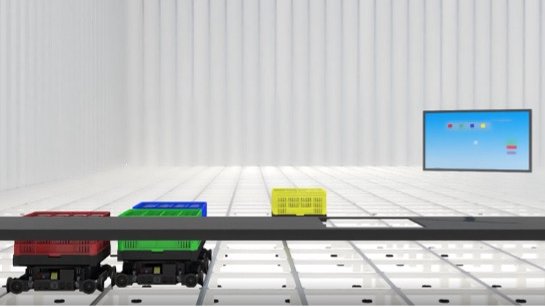
Goods-to-person flips the model. Automation brings each bin of inventory to an operator at a fixed workstation. The operator picks the item into an order tote, confirms it on screen, and the bin goes back into storage.
MHI describes the core gain simply: the walking between picks goes away. Operators also work at a comfortable height, so they bend and reach less over a shift. Software takes over the grouping work that batch, zone, and wave picking do by hand. It decides which bins go to which station, and in what order.
For a full explanation of the equipment, read our guide to goods-to-person picking.
How to choose an order picking method
No method wins in every building. Instead, match the method to your orders, your SKU count, and your labor market.
Order profile
Start with lines per order and units per line. Single-line orders favor batch picking, because one trip can cover many of them. Multi-line orders spread across the building favor zone picking or goods-to-person. If most orders ship as full cases or pallets, picking method matters less than case handling.
SKU count and storage density
The more SKUs you carry, the longer the walk in any person-to-goods method. In addition, high SKU counts make slotting harder to maintain. Goods-to-person systems store inventory densely and bring it to the operator, so SKU count stops driving travel time.
Volume swings
Seasonal peaks expose every weakness in an order picking process. Piece and batch picking scale by adding temporary pickers, who need training and space. Goods-to-person scales by adding robots or stations. Attabotics' e-book notes that operators learn its system in about five minutes.
Labor availability
If you struggle to hire and keep pickers, a method that still depends on walking will keep hurting. In that case, the question shifts from which manual method to use to whether to automate.
Picking errors: where each method breaks down
Every order picking method has a weak spot for errors. Piece picking errors come from similar items stored side by side. Batch picking adds the sorting step. Zone picking adds handoffs between people. Wave picking adds time pressure at the start of each wave.
Those errors are costly. For instance, a wrong item means a return, a reship, labor to fix it, and sometimes a lost customer. Our breakdown of what a mispick actually costs walks through each piece of that bill.
Goods-to-person systems reduce errors at the source. Each bin arrives at one station with an on-screen prompt, so the operator sees exactly what to pick and confirms it before the bin leaves.
Which cube-based warehouse robotics improve picking efficiency most?
Picking efficiency in a cube system comes down to two questions. First, how fast can a robot deliver the right bin? Second, how much grouping work does the software take off the operator?
The Attabotics system answers both. Its Attabot robots travel horizontally and vertically inside the Cubic Storage Structure, so they reach any bin directly without digging through stacks. As a result, any bin reaches an operator in under 90 seconds, wherever it sits.
The software handles the work that batch and wave picking do by hand. Attabotics Software batches picks across multiple orders instead of working one order at a time. It can also rush high-priority orders while it batches lower-priority ones. Sequencing and sortation happen inside the structure, so a station can pick, pack, and ship an order in one flow.
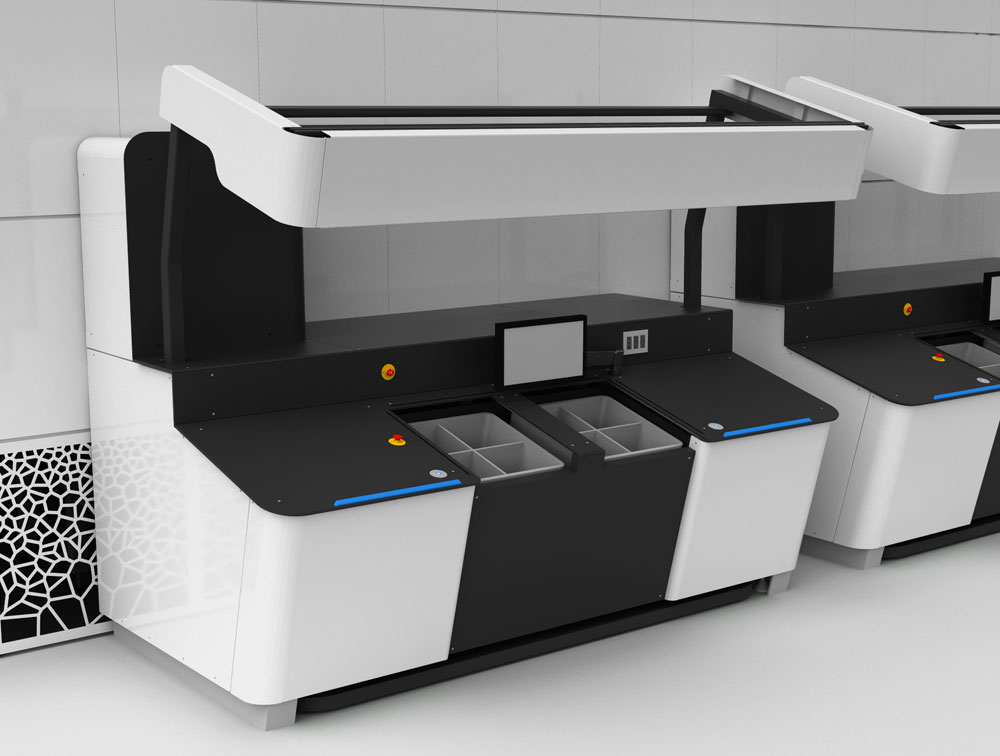
At the station, the Node X workstation averages 300 bin presentations per hour, and up to 400 when optimized. Attabotics reports that robotic picking can lift rates from about 100 units per hour, a typical manual target, to 350 to 400 units per hour. The same stations also handle decanting, cycle counts, and kitting.
Customer results show what that means on a real floor. At Modern Beauty Supplies, Attabotics reports an 84% reduction in picking labor, with more than 95% of picking automated. SCI, a third-party logistics provider, picks 65% more units per hour in 70% less space. For the cost side of the decision, read our guide to reducing warehouse labor costs with robotic picking.
Order picking FAQ
The five common methods are piece picking, batch picking, zone picking, wave picking, and goods-to-person. The first four organize how pickers walk and how orders are grouped. Goods-to-person brings the inventory to a fixed station, so the operator stops walking. Many warehouses combine methods, such as zone picking released in waves.
Batch picking groups several orders into one picker's trip, so one walk covers many orders. Wave picking releases groups of orders to the floor at set times, usually to meet a carrier cutoff. A wave can contain batches. In short, batching is about the trip, and waves are about timing.
Goods-to-person methods tend to be the most accurate, because each bin arrives at one station with a screen prompt and a confirmation step. Manual methods rely on the picker finding the right slot. Batch and zone picking add sorting and handoff steps, which add more chances for mistakes.
It depends on labor rates, volume, and space. Automation costs more up front. However, Attabotics reports up to 75% less labor and up to 85% less space than traditional racking. Compare that against the yearly cost of the pickers, temps, and floor space you would otherwise add.
See goods-to-person order picking in person
A comparison table only goes so far. Watching bins arrive at a station in sequence shows how much walking a goods-to-person system removes. Book a site tour to see it running, or explore the technology behind it.