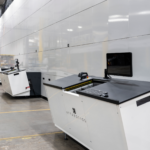
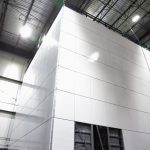
A vertical lift module (VLM) is an enclosed tower of trays that brings parts to one pick window, while cube storage is a dense block of bins served by robots and several workstations. Choose by SKU profile. A vertical lift module fits small parts, slower movers, and a few operators. Cube storage fits high SKU counts, each-pick orders, and throughput that has to grow.
Both systems save floor space, and both bring goods to the operator. The differences show up in how many people they serve, how they scale, and how they handle a mixed inventory. This guide compares them side by side.
In this article
- What is a vertical lift module?
- What is cube storage?
- Vertical lift module vs. cube storage at a glance
- How each system handles throughput
- Density and space
- Software and integration
- Which SKU profile fits a vertical lift module?
- Which SKU profile fits cube storage?
- When neither is the right answer
- Vertical lift module FAQ
- Talk through your SKU profile
What is a vertical lift module?
A vertical lift module is a tall, enclosed cabinet with two columns of trays. An inserter/extractor runs up the center between the columns. When the operator calls an item, the extractor pulls the right tray and delivers it to a pick window at waist height.
Because the trays sit inside a closed unit, the machine can pack them tightly. For example, according to Kardex's overview of ASRS types, VLMs store trays as close as one inch apart. Their manufacturers report floor space savings of up to 85% compared with static shelving. Kardex also lists standard throughput at 125 to 350 items per hour.
In addition, VLMs are the most adaptable of the shelf-based systems when item sizes change often. That is because tray spacing adjusts to the height of what sits on the tray, so a mix of short and tall parts doesn't waste much air.
What is cube storage?
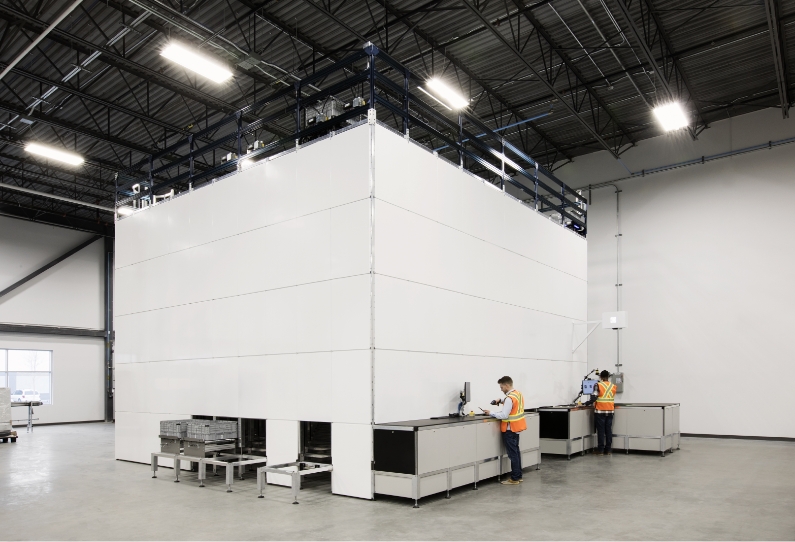
Cube storage replaces shelving and aisles with one dense block of bins. Robots retrieve the bins and then deliver them to workstations around the outside of the block. Meanwhile, people never enter the storage area.
There are two main designs. In the common top-grid design, robots drive across the top of stacked bins and dig down to reach the one they need. In a 3D cube design like the Attabotics system, robots travel horizontally and vertically inside the structure. As a result, they reach any bin directly, with no digging.
For a wider view of how cube systems compare with shuttles, carousels, and mini-loads, see our guide on how 3D cube storage compares to other ASRS types.
Vertical lift module vs. cube storage at a glance
| Vertical lift module | 3D cube storage (Attabotics) | |
|---|---|---|
| Storage unit | Trays on two columns in an enclosed tower | Bins in a dense structure with no aisles |
| How goods move | One extractor brings one tray at a time | Many robots move bins in three dimensions |
| Access points | One pick window per unit, sometimes two | Many workstations around one structure |
| Throughput | 125–350 items per hour per unit (Kardex, standard configurations) | Node X station: 300 bin presentations per hour on average, up to 400 |
| Height | Set by the unit and the building | Up to 12 m (39 ft 5 in) |
| Scaling | Add another unit | Add robots, stations, or storage to the same structure |
| Item fit | Small parts, varied heights | Items that fit a bin, up to 45 kg per bin |
| Best SKU profile | Hundreds to low thousands of SKUs, slower movers | High SKU counts, each-picks, mixed velocity |
Note that the throughput figures measure different things. VLM figures count items picked per unit. The Node X figure counts bins presented to one station, and each bin can supply several picks.
How each system handles throughput
A vertical lift module has one extractor. While the extractor fetches the next tray, the operator waits or works on something else. Some sites pair two or three units per operator, so one unit fetches while the operator picks from another. Even so, each unit can only deliver one tray at a time.
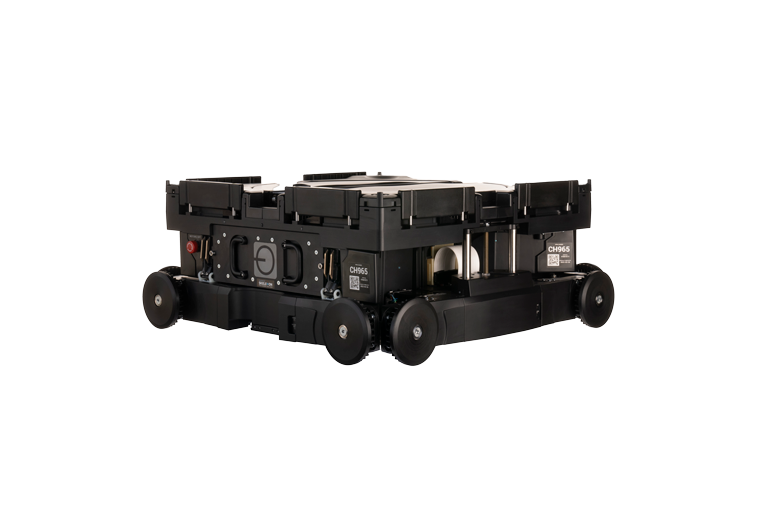
By contrast, cube storage spreads the work across many robots. In the Attabotics system, several Attabot robots work at once, each traveling at 2.7 m/s. Consequently, any bin reaches an operator in under 90 seconds. Because any order can be completed at any station, you can add stations as volume grows.
That design also changes what happens when something fails. If a VLM's extractor stops, every tray in that unit is out of reach until it is repaired. In the Attabotics system, the remaining robots keep working if one goes down, so there is no single point of failure.
Density and space
Both systems claim large space savings, so read the baseline carefully. First, VLM makers measure their savings against static shelving. Attabotics, however, measures its savings of up to 85% against traditional racking.
The bigger difference is scale. A VLM installation grows one tower at a time, and each tower needs its own footprint and its own operator access. A cube structure, on the other hand, is one block. It can stand up to 12 meters tall, and it works around walls, corners, and existing building columns. For a large SKU base, one structure with several workstations usually uses the building's height more fully than a row of separate towers.
Software and integration
One vertical lift module is simple to manage. Once you install several towers, however, someone or some system has to decide which unit holds each SKU and how to split orders across them. So ask each VLM vendor how its controls connect to your warehouse management system (WMS).
Cube storage handles that inside one system. Attabotics Software manages robot movement, sequencing, and sortation across the whole structure. It also connects to your existing WMS or ERP without middleware, through a communications layer that works with any host system once it is specified. As a result, orders flow to whichever station is free, and the operator only sees the next pick on screen.
Which SKU profile fits a vertical lift module?
A vertical lift module is a strong choice when most of these are true:
- You carry hundreds to a few thousand SKUs, mostly small parts.
- Items move slowly or at a medium pace.
- Order volume is low to moderate, and one or two operators can keep up.
- Item heights vary a lot, so adjustable tray spacing pays off.
- You need secure, enclosed storage for tools, spares, or controlled items.
Tool cribs, maintenance stores, and small-parts rooms in manufacturing plants, for example, fit this profile well. In those settings, a VLM gives dense, secure storage without a large project.
Which SKU profile fits cube storage?
Cube storage earns its place when the inventory and order volume outgrow a few towers:
- You carry many thousands of SKUs.
- Orders are each-picks, often several lines per order, as in e-commerce and retail.
- Volume swings with seasons, and you need to add capacity without adding people at the same rate.
- Several operators need to pick at once.
- You want picking, decanting, cycle counts, and kitting at the same stations.
The results from real installs show the scale involved. For example, Modern Beauty Supplies runs more than 12,000 SKUs across 98,000 storage locations in its Attabotics system. Attabotics reports an 84% reduction in picking labor at that site.
When neither is the right answer
Some inventory fits neither system. Items heavier than a bin's 45 kg limit, or too large for a bin, belong in pallet storage. Likewise, full-case and full-pallet orders gain little from either system. Our guide to automated parts storage covers how to split heavy and bulky items from small, bin-sized parts.
In practice, many large facilities run more than one technology. For instance, a plant might keep a VLM in the tool crib and run cube storage for its service parts business.
Vertical lift module FAQ
A vertical lift module stores small parts on trays inside an enclosed tower and brings each tray to a waist-high pick window. Typical uses include tool cribs, spare parts, maintenance stores, and small-parts picking. It suits slower-moving inventory and lower order volumes, where one or two operators can keep up.
Yes. A vertical lift module is one type of automated storage and retrieval system. It belongs to the shelf or tray delivery group, where a whole tray comes to the operator. Cube storage belongs to the bin delivery group, where robots bring individual bins to workstations.
Kardex lists standard VLM throughput at 125 to 350 items per hour. Actual speed depends on tower height, tray weight, and how many units each operator runs. For comparison, Attabotics delivers any bin in under 90 seconds and its Node X station averages 300 bin presentations per hour.
Yes. Many facilities match each technology to a different inventory profile. A VLM can handle tools, spares, or controlled items. Meanwhile, cube storage handles the high-SKU, each-pick work. Your warehouse management system can direct orders to both.
Talk through your SKU profile
The right system depends on your SKU count, order lines, and building. Attabotics can review your order data and show how a cube structure would fit your space. Contact our team to start the conversation, or explore the technology first.