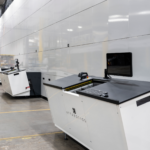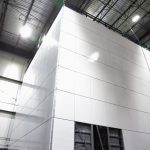

The best automated parts storage system depends on what your parts weigh, how big they are, and how many SKUs you carry. For small and medium parts that fit in a bin, goods-to-person cube storage packs the most locations into the least space and brings any part to a picker. Attabotics bins hold up to 45 kg each, with up to 16 compartments. Heavier or bulkier items, such as engines, long stock, or full pallets, belong in pallet-level storage instead.
This guide covers what makes parts distribution hard to automate, how the main system types compare, and how to match a system to your item profile.
In this article
- Why parts distribution is hard to automate
- Automated parts storage options compared
- Matching automated parts storage to weight and size
- How 3D cube storage handles parts
- Where automated parts storage pays off
- Questions to ask before you choose automated parts storage
- See how 3D cube storage fits your parts
- Frequently asked questions
Why parts distribution is hard to automate
Parts operations look different from most e-commerce warehouses. First, SKU counts run high. A distributor can stock tens of thousands of part numbers, and many of them move only a few times a year. Those slow movers still need a home, and a customer still expects them to ship the same day.
Second, the weight range is wide. One order can include a box of washers and a 20 kg gearbox. Third, accuracy matters more than usual. A wrong part means a truck sits idle or a line stays down while a replacement ships.
Finally, demand is uneven. Service parts orders spike after storms, recalls, or equipment failures. As a result, the storage system has to handle bursts without adding temporary staff who don't know the inventory.
Automated parts storage options compared
Several system types can store parts. However, each automated parts storage option fits a different mix of weight, size, and order rate. The table below shows the general pattern; specific limits always come from the vendor.
| System type | How it works | Best fit for parts |
|---|---|---|
| Vertical lift module (VLM) | Trays stacked in a tall cabinet; a lift brings one tray to an opening | Small parts, low to moderate pick rates, a few hundred to a few thousand SKUs per unit |
| Horizontal carousel | Bins rotate on a loop to bring a bin to the operator | Small parts with steady, moderate demand |
| Miniload or shuttle ASRS | Cranes or shuttles run aisles of totes and cartons | Higher throughput; aisle layout uses more floor space |
| Top-grid cube storage | Bins stack in a grid; robots dig from the top | Dense storage; buried bins take longer to reach |
| 3D cube storage | Robots move inside the structure, horizontally and vertically, to any bin | Dense storage with direct access to every bin, including slow movers |
| Pallet unit-load ASRS | Cranes store and retrieve full pallets | Heavy, bulky, or full-case items |
For that reason, many parts operations end up with two systems. Automated parts storage in bins covers the long tail of small and medium parts. Pallet storage or racking covers the heavy and oversized items.
Matching automated parts storage to weight and size
Start by sorting your SKUs by weight and dimensions. That one exercise tells you which share of the inventory any bin-based system can take.
Small parts
Fasteners, fittings, filters, electrical components, and seals fit easily in bins. Compartments matter here. Attabotics bins come in two sizes, and each can hold up to 16 custom storage compartments. So one bin can store several small, slow-moving SKUs instead of tying up a full location for each.
Medium and heavier parts up to 45 kg
Pumps, bearings, gear sets, and many automotive and industrial components fall in this range. Attabotics bins carry up to 45 kg each. For heavier parts, a goods-to-person workstation also helps the operator, because the bin arrives at a fixed station instead of a high or low shelf.
Items over the bin limit
Anything heavier than 45 kg, or too long or wide for a bin, needs another approach. Pallet ASRS, cantilever racking, and floor storage handle these items. Plan the split early so both areas share the same WMS and order flow. That way, automated parts storage and heavy-item storage feed the same orders without manual handoffs.

How 3D cube storage handles parts
Attabotics' Cubic Storage Structure replaces aisles with a dense cube. Attabot robots travel horizontally and vertically inside it and reach any storage location directly. They don't dig through a stack to reach a buried bin.
That direct access matters for automated parts storage. For example, in a stacked system, slow movers tend to sink to the bottom, and retrieving one means moving the bins above it first. With 3D access, a part ordered once a year comes out as fast as a top seller. Any bin reaches an operator in under 90 seconds.
The system also keeps working when a robot needs service. There is no single point of failure, so other robots continue picking. Robots charge on supercapacitors while they work, which removes battery swaps and charging downtime.
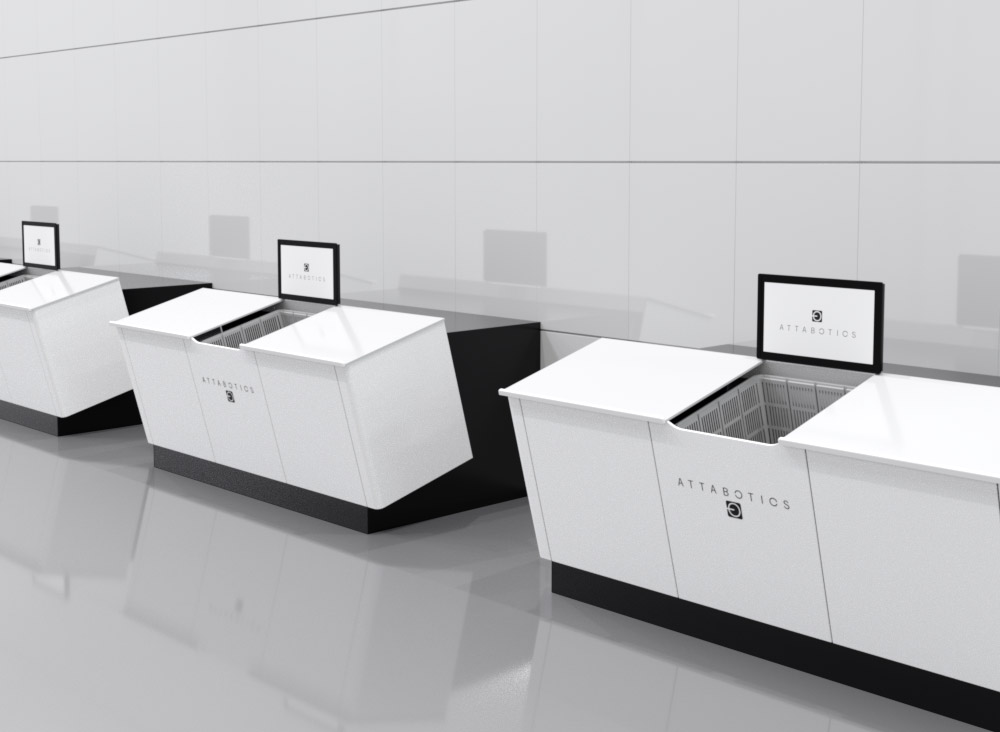
At the workstation, operators can switch between picking, decanting, cycle counts, and kitting by selecting a mode on the screen. Kitting is useful for parts distributors that ship service kits or build-to-order assemblies. Node X stations average 300 bin presentations per hour and reach up to 400 when optimized.
The bins themselves are also worth a look. The Guardian bin is made of galvanized steel instead of plastic. Its fire certification with commercial insurers is underway.
Where automated parts storage pays off
In most cases, the business case for automated parts storage comes from three places: space, labor, and accuracy.
On space, the structure reduces fulfillment space by up to 85%. It builds up to 12 metres (39'5") high and works around walls, corners, and existing columns. It also installs without floor remediation, which helps in older parts warehouses.
On labor, goods-to-person picking removes the walking between picks. MHI describes how these systems route totes to stationary workstations, so pickers stay in one place. Attabotics systems use up to 75% less labor. For more on how this method works, read what goods-to-person picking is and when it pays off.
High SKU counts are a fit too. Modern Beauty Supplies runs more than 12,000 SKUs across 98,000 storage locations and cut picking labor by 84%. In addition, the U.S. Department of Defense selected Attabotics, with KPMG, for the Marine Corps Logistics Command 5G Smart Warehouse in Albany, Georgia. That operation stores, retrieves, and tracks material and supplies.
Questions to ask before you choose automated parts storage
Use this list with every vendor so you compare systems on the same terms.
- What share of my SKUs fit your bins? Send your item master with weights and dimensions.
- How fast can you retrieve a slow mover? Ask for retrieval time for a bin at the bottom or center of storage.
- What happens when one robot or crane fails? Find out whether the system keeps running.
- Can one bin hold several SKUs? Compartments save locations for small parts.
- Does the workstation support kitting and cycle counts? Parts operations need both.
- How does it connect to my WMS or ERP? See how an ASRS integrates with your WMS.
- What does my building need first? Ask about floor, sprinklers, power, and clear height in writing.
See how 3D cube storage fits your parts
If you run a parts or service operation, start with your item master and a year of order history. Those two files show which share of your inventory fits automated parts storage and how many workstations you need.
To see the system running, book a site tour or contact the Attabotics team. You can also review each component on the technology page and deployment options on the applications page.
Frequently asked questions
It depends on your item profile. Goods-to-person cube storage suits small and medium parts that fit in bins, especially with high SKU counts. Items over the bin weight limit, or too large for a bin, belong in pallet ASRS or racking. Many operations combine both.
Up to 45 kg per bin. Bins come in two sizes, and each can hold up to 16 custom storage compartments. That lets one bin store several small parts, or a single heavier component, while the robot delivers it directly to a workstation.
Yes, but retrieval speed varies by system. In stacked systems, slow movers can end up buried under other bins. Attabotics robots move in three dimensions and reach any bin directly, so a rarely ordered part comes out as quickly as a fast mover.
Usually. Attabotics software includes an integration API and a communications layer that can work with any host system, as long as the interface is specified. Plan the integration early, alongside the item data review.