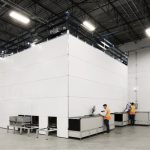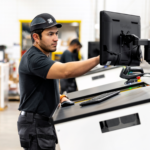
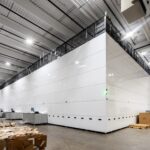
A sortation system takes items that were picked together and routes each one to the right order, lane, or truck. In most warehouses that means a separate machine: conveyor, a sorter, and chutes or put walls that sit between picking and packing. Those machines take floor space and add a handoff where orders can stall. Attabotics takes a different approach. Its software sorts and sequences orders inside the storage structure, so the robots deliver bins to the workstation in the order the work needs them.
This guide explains how a warehouse sortation system works, where it costs space and time, and what changes when sorting happens inside the storage footprint.
In this article
- What a sortation system does
- Where a conventional sortation system costs you
- How Attabotics handles sortation inside the footprint
- What changes in the layout
- When a separate sortation system still makes sense
- Questions to ask before you buy a sortation system
- Sortation system FAQ
- See it run
What a sortation system does
Picking and shipping don't happen one order at a time in a busy building. Pickers pull items for many orders in a batch or a wave, because that saves walking. Then something has to split the batch back into orders. That job belongs to the sortation system.
A typical setup has three parts:
- Induction. Items or totes enter the sorter, often from a conveyor fed by the pick area.
- Identification. A scanner reads each item's barcode, and the control software decides where it goes.
- Diversion. The sorter pushes, tilts, or drops each item into the right chute, lane, or put-wall cubby.
After that, packers pull completed orders from the chutes or cubbies and send them on. The sorter's job is to make batch picking possible without mixing up orders.
Common types of sortation system
Most sorters fall into a few families:
- Sliding shoe sorters push cartons sideways off a conveyor into outbound lanes.
- Cross-belt and tilt-tray sorters carry items on a loop and drop them into chutes.
- Pocket sorters hang items in pouches and release them in order.
- Put walls use lights to tell a person which cubby gets each item.
Each type trades speed, item range, and cost differently. However, they share one trait: they are a separate system that sits downstream of storage and picking.
Where a conventional sortation system costs you
A sorter solves the batch problem, but it brings costs of its own.
Floor space for the sortation system
Conveyor loops, induction points, chutes, and put walls all need floor area. That area sits outside the storage zone and can't hold inventory. In a building that is already tight, the sorter competes with storage for the same square footage.
Conveyor between storage and stations
Many automated storage systems also need conveyor to move totes from storage to picking stations. A Körber Supply Chain review notes that shuttle systems depend on conveyor to connect storage with workstations. In high-throughput systems, it adds, those conveyors become complicated and expensive.
Another handoff to manage
Every transfer from one system to the next is a place where work can queue. If the sorter jams or a chute fills, picking upstream has to slow down. As a result, the slowest link sets the pace for the whole flow.
A sortation system has fixed capacity
A sorter is sized for a peak rate on the day it is installed. When volume grows past that rate, the fix is usually a bigger sorter or a second one. That means another project and more floor space.
How Attabotics handles sortation inside the footprint
Attabotics builds sorting into the storage system itself. According to the Attabotics technology page, its software is "designed to handle sequencing, sortation, and conveyance." The same page describes pick, pack, and ship as "one integrated process flow" within the cube.
Robots reach any bin directly
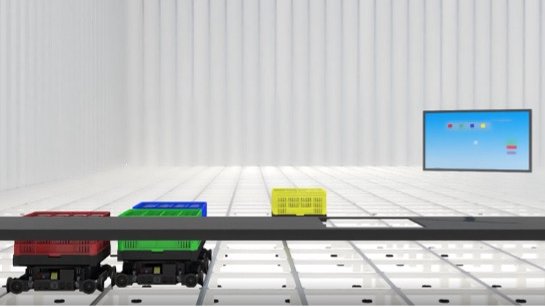
Attabot robots travel horizontally and vertically inside the Cubic Storage Structure. Each one has direct access to every storage location. So any bin can reach an operator in under 90 seconds, wherever it sits. No robot has to dig through a stack to reach it.
That direct access is what makes in-structure sorting possible. Because the system can pull any bin at any time, the software can choose the order bins arrive. In effect, the robots do the sorting before the item ever leaves storage.
Sequencing with short, predictable trips
The Körber review explains how this works. The system uses short and predictable response times, together with the space below the storage area, to sequence bins efficiently. Its example is a common one: heavy products need to arrive before fragile ones. Attabotics can present them in that order.
Partner materials describe the result as "full in-footprint sortation and sequencing, with priority orders presented in under 90 seconds."
Software sets the order
Attabotics Software is the order management and control layer for the robots. It runs the robots in 90-second waves and supports a continuous processing flow. It also allows customizable order processing for any business rule. The software can batch picks across several orders at once, which raises throughput without adding pickers. Our guide to warehouse throughput covers how batching and priority orders work in practice.
Any order at any station
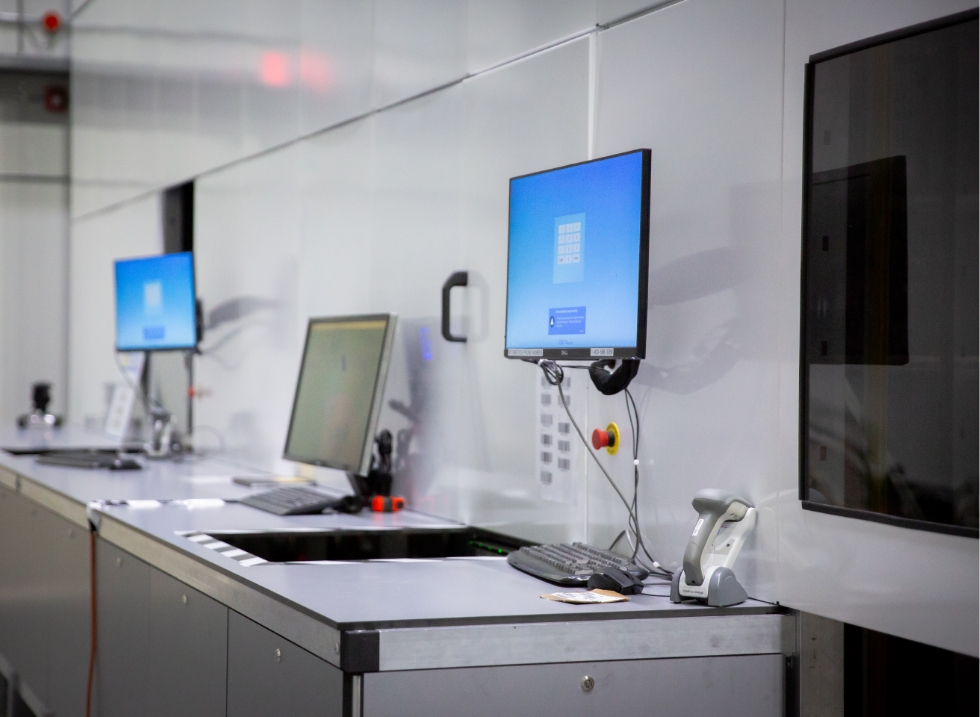
Any order can be completed at any workstation. Therefore the system doesn't need a lane or chute assigned to each destination. A Node X workstation presents an average of 300 bins per hour, and up to 400 when optimized.
What changes in the layout
Moving sortation inside the storage footprint changes how the building is planned.
Less floor given to a sortation system
When the robots sequence bins, the building can drop some of the conveyor and sorter area that sits between storage and packing. Attabotics reports up to 85% less fulfillment space than conventional storage. The structure itself fits around walls, corners, and columns.
Fewer systems to connect
The Körber review points out that Attabotics doesn't need complicated, inflexible conveyor to link workstations to storage. Fewer systems also means fewer interfaces with the warehouse management system. Our article on ASRS and WMS integration explains how the host system connects.
Capacity grows in steps
Storage and throughput scale independently. To store more, extend the structure. To move more orders, add robots or workstations, which can be installed without stopping the operation. In contrast, a fixed sorter has to be replaced or doubled when it runs out of rate.
Rush orders don't break the plan
Direct access makes the system independent of the order profile, according to Körber. It also handles rush orders and other changes to the planned workload well. Since every bin is equally reachable, a late priority order doesn't wait behind a batch that is already on the sorter.
No single point of failure
Every robot can reach every bin and every workstation. If one robot goes down, the others keep working. A conventional sorter, by comparison, is often one machine that every order has to pass through.
When a separate sortation system still makes sense
In-structure sorting doesn't remove every sorter from every building. A separate sortation system still has a place when:
- Cartons need routing to outbound doors. Shipping sortation by carrier or route happens after packing, outside the storage system.
- Product lives outside the structure. Pallets, long goods, and oversized items flow through other areas and may need their own sortation.
- Volume comes from several pick zones. If orders merge items from racking, the cube, and other areas, a consolidation step may still be needed.
The question to ask is which sorting happens because storage can't deliver items in order. That portion is the part a 3D storage system can absorb.
Questions to ask before you buy a sortation system
Before you spec a new sorter or expand an old one, work through these:
- How much floor space do the sorter, conveyor, and chutes use today?
- What share of sorting exists only to rebuild orders after batch picking?
- How often does the sorter limit throughput at peak?
- What happens to fulfillment when the sorter is down?
- How will you add capacity in three years?
If most of the sorting exists to fix the order items leave storage, a storage system that sequences on its own may be the better investment. See how the technology works to compare.
Sortation system FAQ
A sortation system routes items or cartons to the right order, lane, or truck after picking. It usually scans each item, then diverts it with shoes, belts, tilting trays, or pockets into chutes or put-wall cubbies so packers can complete orders from batch picks.
Sortation groups items by destination, such as an order or a shipping lane. Sequencing puts items in a set order, such as heavy goods before fragile ones. Attabotics Software handles both inside the storage structure by choosing the order robots deliver bins.
Not for rebuilding orders after picking. Attabotics robots reach any bin directly, so the software can present bins in the order each order needs. A separate sorter may still route packed cartons to outbound doors or merge items from other zones.
See it run
The clearest way to judge in-footprint sortation is to watch robots sequence a live order mix. Book a site tour to see an Attabotics system at work.