3PL warehouse automation pays off fastest when it starts with each-pick storage and picking, because that is where labor, space, and service levels all meet. Pallet storage and bulk moves can stay in racking for now. A third-party logistics provider runs many clients' inventory under one roof, with contracts that change and service levels that don't. So the first system has to handle catalogs nobody has seen yet. This guide covers what to automate first, what to leave alone, and the questions to ask before you sign.
In this article
- Why 3PL warehouse automation is different
- What 3PL warehouse automation should tackle first
- What 3PL warehouse automation can leave for later
- Features to look for in a 3PL warehouse automation system
- How to build the business case for 3PL warehouse automation
- Common mistakes in 3PL warehouse automation
- Questions to ask a 3PL warehouse automation vendor
- 3PL warehouse automation FAQ
- Talk to us about your operation
Why 3PL warehouse automation is different
A brand automates around its own catalog. A 3PL automates around clients it may not have signed yet. That changes what good 3PL warehouse automation looks like.
Clients come and go
Contracts start, renew, and end. Each new client brings its own SKUs, order profile, and peak season. A system tuned to one client's demand can be the wrong fit when that client leaves.
SKU counts stack up
Every client adds its own long tail. As a result, a multi-client building often holds far more SKUs than a single brand would. Many of those SKUs move slowly, yet they still have to ship on time when an order arrives.
Service levels are in the contract
Missed ship times and wrong items show up on a client scorecard. They can cost a renewal. Therefore throughput has to hold at peak, when several clients peak at the same time.
Space is what you sell
A 3PL sells capacity out of buildings it leases or owns. Every square foot freed from storage can hold another client's work without another lease.
What 3PL warehouse automation should tackle first
Most 3PLs get the best return by starting where people spend the most time and the building spends the most space. In most buildings, that points 3PL warehouse automation at three areas.
1. Each-pick storage and picking
Picking single items for e-commerce and retail orders is the most labor-heavy work in most 3PL buildings. In a person-to-goods operation, pickers walk to every item. MHI notes that goods-to-person systems remove that walking. Our guide to goods-to-person picking covers how those systems work.
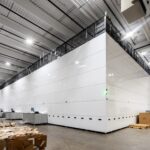
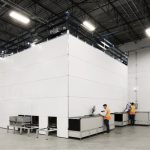
This is the zone SCI, a Toronto-based 3PL, automated first. SCI serves brands in omni-channel retail, technology, health, beauty, and wellness. Its clients' e-commerce volume was rising fast. At the same time, SCI faced labor challenges and rising real estate costs, and it still had to meet its SLAs. In 2019 it installed an Attabotics goods-to-person system. Units picked per hour rose 65%, and the operation used 70% less warehouse space. SCI also reported better ergonomics and higher pick accuracy than its manual process.
2. Storage density for small and medium items
Small, mixed items take up a lot of shelving in a manual building. Dense automated storage pulls them into a smaller footprint, which is often the biggest single gain from 3PL warehouse automation. Attabotics reports up to 85% less space than conventional storage. For a 3PL, the freed floor is capacity that can go to the next client.
3. Replenishment, decanting, and cycle counts
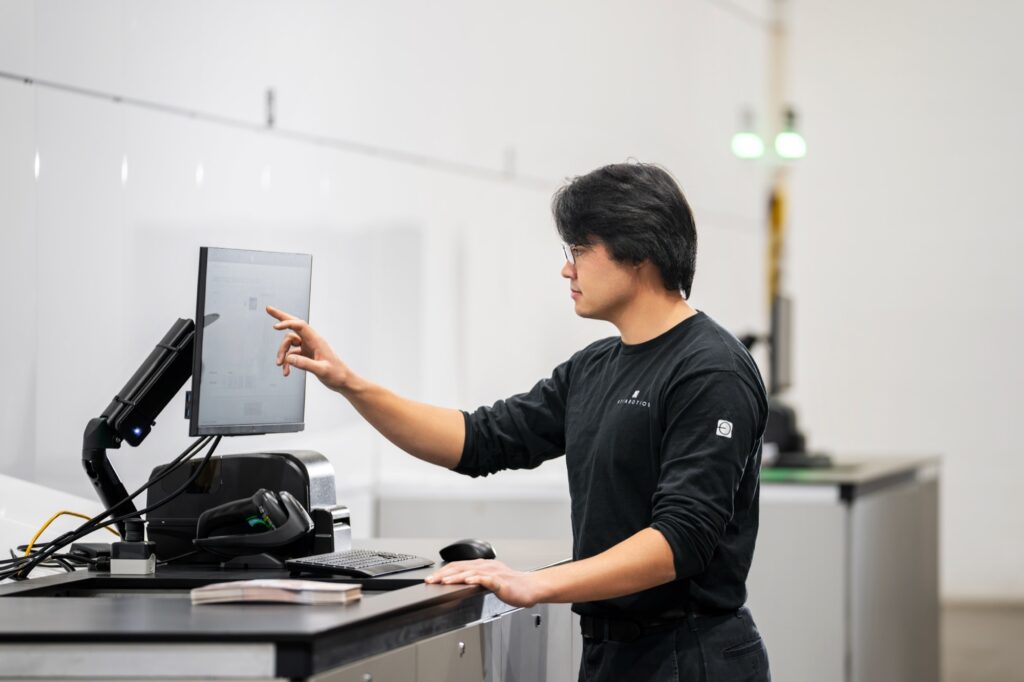
Once each-pick inventory sits in automated storage, the same stations can take on related tasks. Attabotics workstations handle picking, decanting, cycle counts, and kitting. Operators switch modes at the station's touchscreen. So one station can receive a new client's stock in the morning and pick orders in the afternoon.
What 3PL warehouse automation can leave for later
Automating everything at once raises cost and risk. These areas usually wait:
- Full-pallet storage. Racking already stores pallets well, and full-pallet flows rarely need goods-to-person.
- Oversized and long goods. Items that don't fit a bin stay in racking or floor storage.
- Outbound carton sortation. Routing packed cartons to carriers can come later, once picking volume is steady.
- Clients on short contracts. If a client's volume is small or its contract is short, keep it manual until the pattern holds.
Starting with each-pick storage lets the first system pay back before the next project begins. Our article on warehouse automation cost breaks down what drives the budget.
Features to look for in a 3PL warehouse automation system
Judge any system against how a 3PL actually runs.
Equal access to every SKU
Multi-client demand is hard to predict. Some systems work best when fast movers sit in prime spots, and they slow down when slow movers get busy. Attabotics robots travel horizontally and vertically inside the structure and reach any bin directly, in under 90 seconds. Because no robot digs through a stack, a slow mover from one client comes out as fast as a top seller from another. That also means no constant re-slotting when a client's mix shifts.
Room for mixed item profiles
Clients bring items of every size. Attabotics bins come in two sizes, with up to 16 custom compartments and up to 45 kg per bin. Compartments keep small SKUs apart inside one bin.
Warehouse automation that grows with 3PL contracts
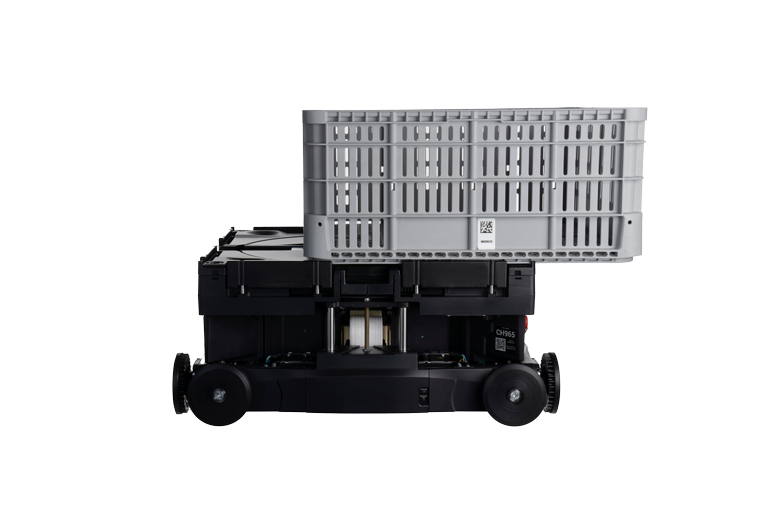
Winning a client shouldn't mean stopping work for existing ones. In an Attabotics system, storage and throughput scale independently. Robots and workstations can be added without interrupting the operation. Therefore a 3PL can add capacity as contracts land.
No single point of failure
A stopped system means late orders for every client at once. Attabotics robots can each reach every bin and every station. If one robot goes down, the others keep working.
A fit for the existing building
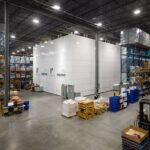
Most 3PLs automate inside a building they already run. The Attabotics structure works around walls, corners, and columns and installs without floor remediation. It can be built up to 12 meters (39 ft 5 in) tall. Gordon Food Service in Calgary, for example, has run an Attabotics system inside its existing manual picking operation since 2018.
WMS connection
3PLs often run their own warehouse management system across clients. Attabotics uses a communications layer that connects to any host system once it is specified.
How to build the business case for 3PL warehouse automation
Run the numbers in 3PL terms, not general warehouse terms.
- Treat space as revenue. Count freed floor area at the rate you charge clients for capacity, not only at your lease cost. SCI's 70% space reduction shows how large that number can be.
- Price labor at peak. The labor that hurts is the extra staff hired when several clients peak together. Attabotics reports up to 75% less labor than traditional fulfillment.
- Count service-level risk. Add up what missed ship times and mispicks cost in credits and lost renewals.
- Plan for the next client. If adding a client means a shutdown to expand, include that downtime in the cost. A system that grows while it runs avoids it.
- Compare capital. Attabotics reports up to 50% less CapEx than comparable approaches.
Common mistakes in 3PL warehouse automation
A few patterns show up again and again when 3PLs automate:
- Sizing for one anchor client. If the system is designed around a single large client's profile, it can sit underused when that contract ends. Instead, size it for the mix of clients you expect to serve.
- Buying for today's peak only. Volume rarely stays flat. Choose a system where storage and throughput can grow separately, so the next contract doesn't force a new project.
- Treating integration as an afterthought. The WMS link decides how fast a new client goes live. Ask about it early, before layout work starts.
- Automating the easy zone first. Pallet flows are simple to automate but rarely where the labor goes. Start where pickers walk the most.
Questions to ask a 3PL warehouse automation vendor
Before you choose a system, ask each vendor:
- How does retrieval time change for slow-moving SKUs?
- What does adding storage or stations look like while we keep shipping?
- What happens to throughput if one robot or one station goes down?
- How does the system connect to our WMS, and who builds that link?
- Which 3PL customers run the system today, and what results have they published?
Then see which answers hold up in a running building. Explore where Attabotics fits, including retrofits of existing warehouses.
3PL warehouse automation FAQ
Most 3PLs start with each-pick storage and picking for e-commerce and retail orders. That work uses the most labor and shelving. Pallet storage, oversized items, and outbound carton sorting can usually wait until the first system is paying back.
Yes, if every SKU is equally easy to reach. In a 3D cube system, robots reach any bin directly, so a new client's slow movers come out as fast as fast movers. Robots, stations, and storage can also be added without stopping the operation.
SCI, a Canadian 3PL, has run an Attabotics goods-to-person system since 2019. It reported 65% more units picked per hour, 70% less warehouse space, better ergonomics, and higher pick accuracy than its manual process.
Talk to us about your operation
Every 3PL has its own client mix. Contact Attabotics to talk through which part of your building to automate first.