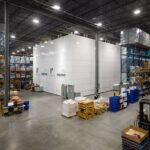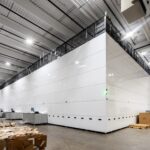

There is no single price for an automated storage and retrieval system (ASRS). Warehouse automation cost depends on how many items you store, how many orders you ship per hour, how much the building needs to change, and what the software has to connect to. Most vendors quote each project from your order and SKU data. So the useful question is what drives the number, and what the system takes off your operating costs once it runs.
This guide breaks an ASRS budget into its parts, shows the costs automation removes, and explains how to estimate payback before you talk to a vendor.
In this article
- Why there is no single warehouse automation cost
- What goes into an ASRS budget
- The costs automation takes off your books
- How to estimate warehouse automation cost and payback
- Hidden warehouse automation cost to ask about
- How Attabotics approaches warehouse automation cost
- Get a warehouse automation cost estimate for your building
- Frequently asked questions
Why there is no single warehouse automation cost
Two warehouses with the same square footage can need very different systems. One ships 500 orders a day from 2,000 SKUs. Another ships 20,000 orders a day from 40,000 SKUs. The second needs more storage locations, more robots, and more workstations, so its budget grows with it.
Throughput sets the size of the system. Storage capacity sets the size of the structure. Meanwhile, the building decides how much site work comes first. Because each of those varies, a published price list would mislead more buyers than it helped.
That is also why the cheapest quote is rarely the cheapest system. A lower purchase price can hide floor work, a longer install, or a system that has to stop when one machine fails. Compare the full warehouse automation cost over the life of the system.
What goes into an ASRS budget
Most quotes break warehouse automation cost into six parts. Ask every vendor to price each one separately so you can compare them line by line.
Storage structure and bins
The structure holds your inventory. Its cost scales with the number of storage locations and the height you can build to. Bins are part of this line too, and bin count grows with SKU count and inventory depth.
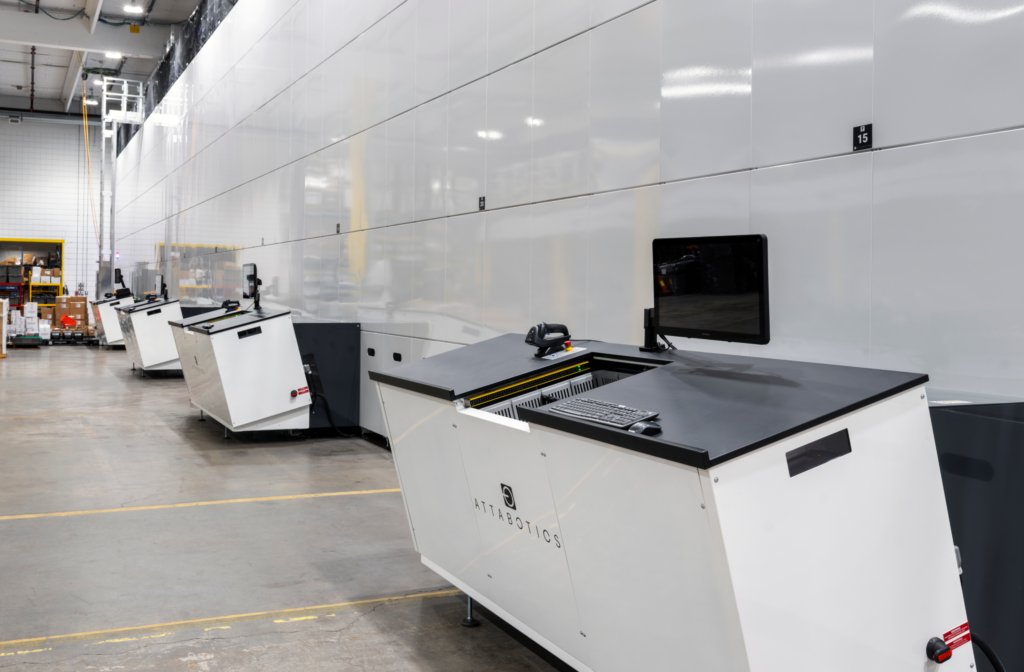
Robots and workstations
Robots move bins between storage and people. Workstations are where operators pick, pack, decant, and count. You need enough of both to hit your peak order rate. As a result, peak season often sets this line, not an average day.
Software and integration
The control software runs the robots, sequences orders, and tracks inventory. It also has to talk to your warehouse management system (WMS) or ERP. Integration effort depends on how many systems connect and how custom your business rules are.
Building and site work
This covers anything the building needs before installation. Examples include floor remediation, sprinkler changes, power, lighting, and moving existing racking. Site work is the line most likely to surprise a buyer. In an older building, it can change warehouse automation cost more than any other line, so it gets its own section below.
Installation, training, and commissioning
Crews assemble the structure, install robots and stations, and test the system with real orders. Your team also needs training. Shorter training means less time with two systems running side by side.
Service, spare parts, and support
After go-live, you pay for maintenance, spare parts, software support, and sometimes software licenses. These recurring costs belong in every comparison, because they continue for the life of the system. Over ten years or more, they can add up to a large share of total warehouse automation cost.
The costs automation takes off your books
Warehouse automation cost only makes sense next to the savings. Three operating costs usually carry the business case.
Labor. Labor is often the largest operating cost in a warehouse. Honeywell puts it at over 70% of operating budgets in traditional warehouses, as cited in Attabotics' 2023 ASRS Trends Report and automation e-book. Goods-to-person systems cut that cost because robots bring bins to people, so pickers stop walking aisles. For a deeper look at this line, see how automated storage cuts warehouse labor costs.
Cost per order. Chainalytics found that automated picking can lower the average cost per order from $10–15 to $3–6. Those figures come from a 2020 study of micro-fulfillment, also cited in the Trends Report. Your own numbers will differ, but cost per order is the cleanest way to compare today's operation with an automated one.
Space. Dense storage holds more inventory in less floor area. That can mean subleasing freed space, avoiding a new building, or fitting fulfillment into a site closer to customers. In other words, space savings can be worth as much as labor savings in expensive real estate markets.
How to estimate warehouse automation cost and payback
You can build a solid first estimate before any vendor visit. Start with your own data, then let vendors fill in their prices.
- Pull a year of order data. Include order lines, units, SKUs, and peak days. Vendors size systems from this.
- Measure today's cost per order. Divide labor, space, and error costs by orders shipped.
- Document the building. Gather slab drawings, a floor survey, clear height, column spacing, and sprinkler layout.
- List every system to integrate. Name your WMS, ERP, and any shipping or order management software.
- Ask for itemized quotes. Get the six budget lines above priced separately, plus annual service costs.
- Model payback. Compare total project cost with annual savings in labor, space, and errors.
For a reference point on payback, MHI reported in 2020 that goods-to-person ASRS projects typically return their investment in three to five years. Treat that as a rough benchmark. Labor rates, shift count, and real estate costs move payback more than anything else.
Hidden warehouse automation cost to ask about
Some costs never appear on the first quote. Ask about each one in writing.
Floor remediation. Some systems need a very flat slab. For example, AutoStore states on its brownfield retrofit page that a flat concrete surface is a requirement. AutoStore adds that out-of-spec floors can usually be fixed with grinding, patching, and a thin overlay. That work adds cost and time before installation starts. Our guide to ASRS floor requirements covers what to check.
Downtime. If one machine failure stops the whole system, every hour of downtime has a price. Ask what happens when a robot goes down and how fast it can be removed.
Battery replacement and charging space. Battery-powered robots need charging time, charging space, and eventually new batteries. Ask for the replacement schedule and cost.
Expansion. Your volume will change. Ask whether you can add storage, robots, or stations later without stopping operations.
Software fees. Find out whether software is licensed per year, per robot, or per site, and what upgrades cost.
How Attabotics approaches warehouse automation cost
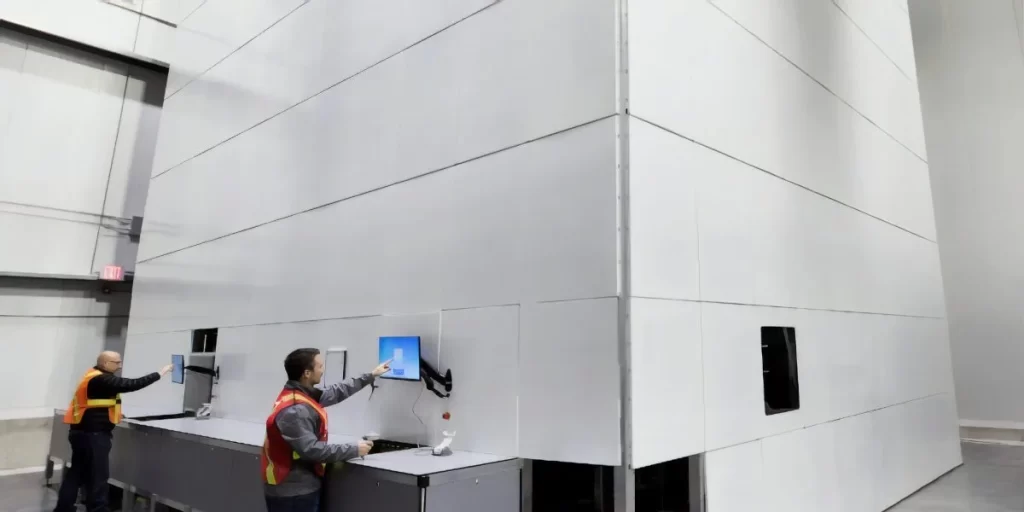
Attabotics designed its system to remove several of those hidden lines. The Cubic Storage Structure installs without floor remediation and works with most existing floors. It also works around walls, corners, and existing columns, so many retrofits skip major building changes.
Attabot robots travel horizontally and vertically inside the structure and reach any bin directly. Because no robot depends on another, the system keeps working if one robot is down. Robots charge on supercapacitors while they work, so there are no battery swaps and no separate charging area. Maintenance happens at ground level through robot maintenance bays.
The system also grows in steps. You can add robots without interrupting operations, and presentation stations can be installed at any time. That lets you size for today and expand when volume justifies it, which spreads warehouse automation cost over time instead of paying for peak capacity on day one.
On the savings side, Attabotics systems deliver up to 85% less space, up to 75% less labor, and up to 50% less CapEx. Any bin reaches an operator in under 90 seconds. In practice, Modern Beauty Supplies cut picking labor by 84% with more than 95% of picking automated. SCI, a 3PL, picks 65% more units per hour in 70% less space.
Get a warehouse automation cost estimate for your building
The fastest way to a real number is to start with your own data. Bring a year of orders, your floor plan, and your current cost per order. Then compare systems on the full budget, including site work, service, and expansion.
To see how the system fits your building, book a site tour or contact the Attabotics team. You can also review each component on the technology page.
Frequently asked questions
It depends on storage locations, peak order rate, building work, and integration. Vendors price each project from your order and SKU data. Ask for itemized quotes covering structure, robots, workstations, software, site work, installation, and annual service, so you can compare total cost.
Often, over the life of the system. Labor can exceed 70% of a traditional warehouse's operating budget, according to Honeywell. Automation also cuts cost per order and frees floor space. Compare total project cost with several years of labor, space, and error savings.
MHI reported in 2020 that goods-to-person ASRS projects typically pay back in three to five years. Your result depends on labor rates, shift count, real estate costs, and how much site work the building needs before installation.
Floor remediation, downtime when one machine fails, battery replacement, software fees, and the cost of expanding later. Ask every vendor to answer each one in writing before you compare quotes.