AutoStore popularized a specific idea in warehouse automation: stack storage bins into a dense aluminum grid, run robots on top of it, and let those robots deliver bins down to a person instead of sending a person to the bins. It's an effective design, and it's become shorthand for "cube storage" in general. But it's not the only way to build a cube-based automated storage and retrieval system (ASRS), and the differences between approaches matter more than the marketing category suggests.
This article breaks down how AutoStore's grid-based design works, where it runs into structural limits, and how three other systems (Attabotics, Exotec, and Hai Robotics) solve the same problem with different mechanics.
How AutoStore-Style Cube Storage Works
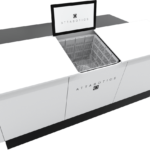
An AutoStore system has four core parts: an aluminum grid, storage bins stacked inside it, robots that travel on tracks across the top of the grid, and ports (workstations) where those robots deliver bins to an operator. Robots move in two dimensions, across the top surface of the grid, and lower a lift mechanism down into the stack to retrieve a specific bin.
Because bins are stacked directly on top of each other, reaching one that's buried under others means moving the bins above it out of the way first. AutoStore's software addresses this by self-optimizing bin placement, keeping frequently accessed inventory near the top of the stack so it surfaces faster. The system can reduce warehouse space by up to 75% and claims a global average availability of 99.6%.
That design is genuinely dense and fast for the right inventory profile. It's also a specific set of tradeoffs, and it's those tradeoffs that lead warehouses to look at other systems.
Alternative 1: Full 3D Robot Movement — Attabotics
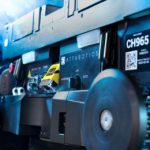
Attabotics uses a cube-shaped storage structure too, but the robots aren't confined to the top surface. The Attabot™ robot moves both horizontally and vertically throughout the structure itself, at a travel speed of 2.7 m/s, giving it direct access to any storage location rather than having to work down through a stack from above.
Key specs, per Attabotics' own technology page:
- Up to 85% reduction in warehouse space
- Up to 75% reduction in labor
- Direct access to any storage location in under 90 seconds
- No single point of failure — the system keeps running if one robot goes down
- No battery — the robot recharges on supercapacitors while working
- Structure height up to roughly 9 meters (29.5 feet), depending on the facility
Because the robot itself travels in three dimensions instead of operating from a fixed top plane, there's no bin-stacking order to manage in the same way AutoStore's system does.
Alternative 2: Vertical Climbing Robots — Exotec Skypod
Exotec's Skypod system takes a different structural approach entirely: instead of a stacked-bin grid, inventory sits on standard-style racking, and robots climb the outside of that racking directly to whichever level holds the item they need.
According to Exotec and industry coverage of the system:
- Robots travel at up to 4 m/s and climb racking up to 14 meters high
- Payload capacity of up to 30 kg per robot
- Every bin is directly accessible without moving other bins out of the way first
- A single robot can handle up to 400 totes per hour
- Orders reach picking stations in as little as two minutes from intake
Because there's no bin-on-bin stacking, there's no reshuffling step, at the cost of a racking structure rather than a sealed bin grid.
Alternative 3: Track-Free Case-Handling Robots — Hai Robotics
Hai Robotics' Autonomous Case-handling Robots (ACR) skip dedicated grid infrastructure altogether. The robots work with standard warehouse racking and move vertically to retrieve totes or cartons directly, which shortens the installation footprint compared to a purpose-built grid or racking system.
Per Hai Robotics' published specs, capability varies by model:
- Reach ranges from roughly 5.2 meters (HaiPick A42) up to 12 meters on telescopic-lift models
- Some models carry payloads up to 300 kg
- Reported footprint reduction of up to 75%
The tradeoff here is the opposite of a sealed cube: less new infrastructure to install, but storage density that depends more on how the existing racking is laid out.
Other Categories Worth Knowing
Two more categories come up often enough in AutoStore comparisons to mention, even though they're not "cube storage" in the same sense:
- Grid-based grocery systems, like Ocado's, use a similar top-of-grid robot design to AutoStore's and are used almost exclusively for grocery e-commerce fulfillment.
- Aisle-based shuttle systems, from vendors like Dematic and Swisslog, use high-speed shuttles running in fixed aisles rather than a cube. They're a different category of ASRS, and worth evaluating alongside cube systems if aisle-based racking already fits the facility.
Comparing the Access Methods
| System | Robot movement | Max height | Digging/reshuffling required? | Works with standard racking? |
|---|---|---|---|---|
| AutoStore | 2D, on top of a stacked bin grid | Not publicly specified in meters | Yes, for bins deeper in a stack | No, purpose-built grid |
| Attabotics | Full 3D, throughout the structure | up to 12 meters / 39'5" | No | No, purpose-built structure |
| Exotec Skypod | 3D, climbs exterior of racking | ~14m | No | Purpose-built racking |
| Hai Robotics ACR | Vertical, on standard racking | ~5.2–12m (model-dependent) | No | Yes |
FAQ
What is AutoStore-style cube storage?
It's a warehouse storage design that stacks bins inside a dense aluminum grid, with robots traveling across the top of the grid to retrieve and deliver bins to workstations. AutoStore is the company that popularized this specific design.
Do all cube storage systems work the same way?
No. AutoStore's robots travel across the top of a stacked bin grid. Attabotics' robots move in three dimensions throughout the entire structure. Exotec's robots climb the outside of racking. Hai Robotics' robots move vertically on standard racking. Each approach changes how quickly a specific item can be retrieved and what infrastructure the warehouse needs to install.
Why would a warehouse look for an AutoStore alternative?
Common reasons include wanting direct access to any storage location without reshuffling bins, needing a system that works with racking the facility already has, or wanting a different height, speed, or payload profile than AutoStore's grid supports.
Which of these systems avoids moving bins to reach one that's buried?
Attabotics, Exotec, and Hai Robotics are all built around direct access to a specific storage location, so none of them require moving other inventory out of the way first. That's a structural difference from AutoStore's stacked-bin grid.
Can these alternatives be installed in an existing warehouse?
It depends on the system. Attabotics' Cubic Storage Structure is modular and doesn't require floor remediation. Hai Robotics' ACR system is designed to work with standard racking already in place. Exotec's Skypod uses purpose-built racking. Each vendor should be asked directly about a specific facility's constraints.
Conclusion
"AutoStore alternative" covers several different mechanical answers to the same question: how do you store the most inventory in the least space and get any item into a person's hands as fast as possible. AutoStore stacks bins and moves robots across the top. Attabotics moves robots through the structure in three dimensions. Exotec climbs racking from the outside. Hai Robotics works within racking a warehouse may already have. The right one depends on what the facility can build, how fast items need to move, and how much reshuffling a warehouse is willing to accept.
Sources
- AutoStore — The AutoStore System and AutoStore homepage — grid/bin/robot/port design, space savings, uptime figure
- Kardex — How AutoStore Works — mechanics of bin retrieval and self-optimizing placement
- Attabotics — Warehouse Automation Technology — Attabotics specs and claims
- DC Velocity — Exotec Launches Next Generation of Skypod System — Skypod mechanics and specs
- Robotomated — Goods-to-Person Systems Guide: AutoStore, Exotec, and HAI Robotics — cross-system comparison detail, throughput and speed figures
- Hai Robotics — Products and HaiPick A42T — ACR specs by model
- CB Insights — AutoStore Alternatives and Competitors — confirms Attabotics as a named AutoStore competitor