Common Questions
ASRS Fire Suppression FAQ
What is ASRS fire suppression?
ASRS fire suppression is the combination of detection, sprinkler protection, storage design and control-system response that keeps a fire inside an automated storage and retrieval system from growing beyond what the protection can handle. It matters more in automated storage because density, height, plastic containers and limited access change how a fire grows and how water reaches it.
Why are fires harder to suppress in an ASRS than in conventional rack storage?
Traditional ASRS designs often reduce flue spaces, stack plastic totes to heights above 40 ft and place shelving and equipment in the path of sprinkler discharge. Heat reaches ceiling sprinklers more slowly, and water has a harder time reaching the fire. Narrow aisles also limit firefighter access.
Which codes and standards apply to ASRS fire protection?
It depends on the jurisdiction. Common references include NFPA 13 for sprinkler systems, International Fire Code Chapter 32 for high-piled combustible storage (with Section 3209 on automated storage in the 2024 edition) and FM Data Sheet 8-34 for automatic storage and retrieval systems. States and municipalities adopt specific editions, and the authority having jurisdiction decides what applies.
Does an ASRS need in-rack sprinklers?
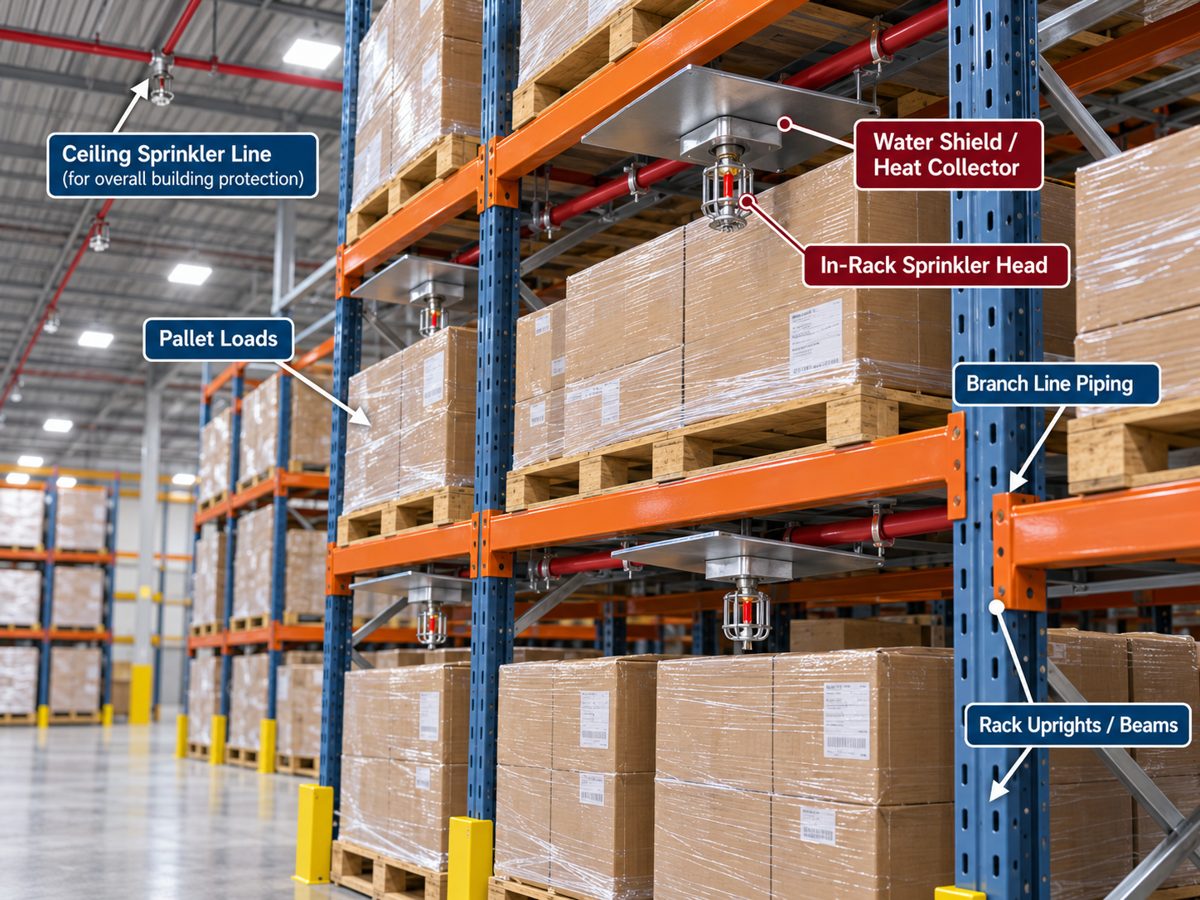
Sometimes. As storage gets taller and denser, fire protection engineers may add in-rack sprinklers to put water directly into the array. They also add installation cost, piping, maintenance and possible conflicts with robot travel paths, so the white paper recommends designing for ceiling-only protection whenever practical.
What is flue space and why does it matter in automated storage?
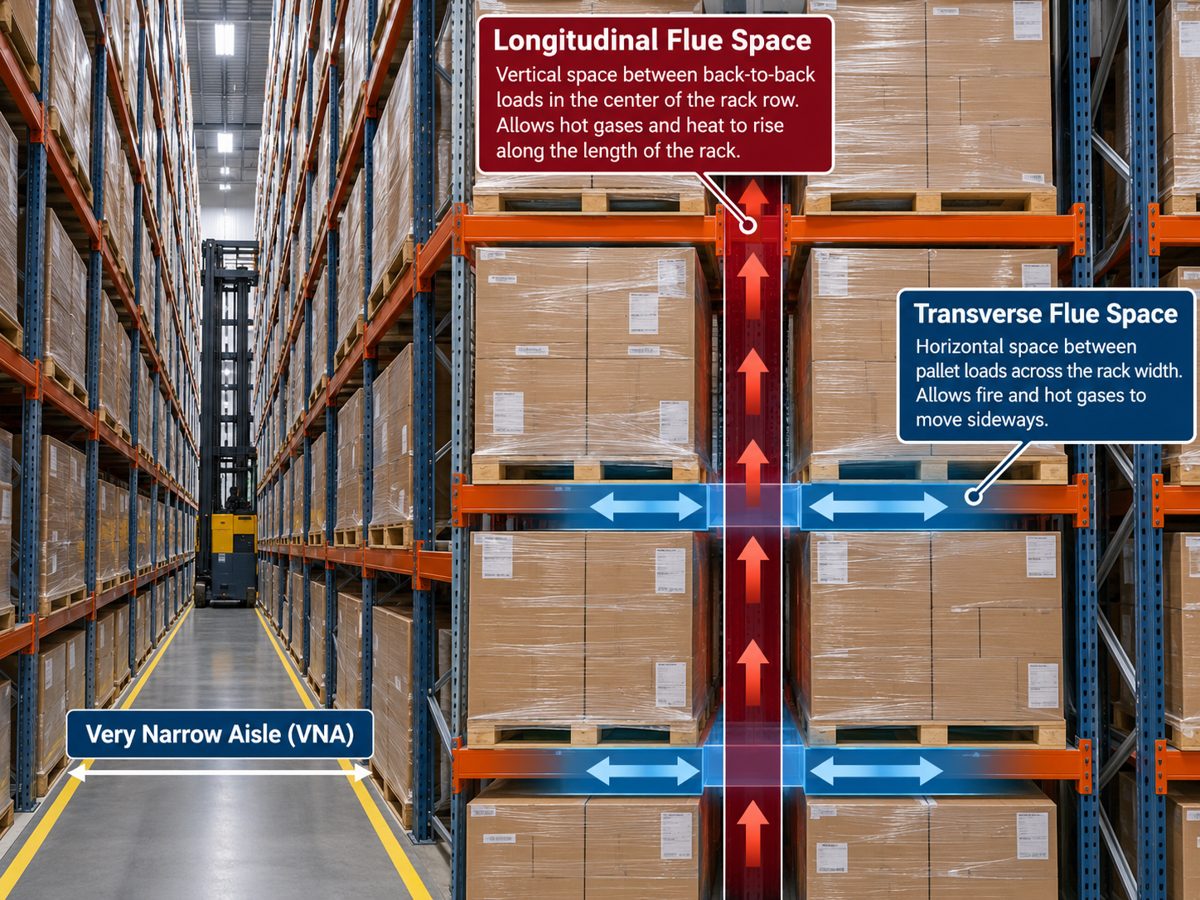
Flue space is the gap between stored loads, longitudinal along the rack and transverse across it, that lets hot gases rise and sprinkler water fall. Dense ASRS designs often shrink it. The white paper notes that loss of flue space can be one of the most significant fire protection challenges in an ASRS installation.
Are perforated totes better than solid-bottom totes for sprinkler performance?
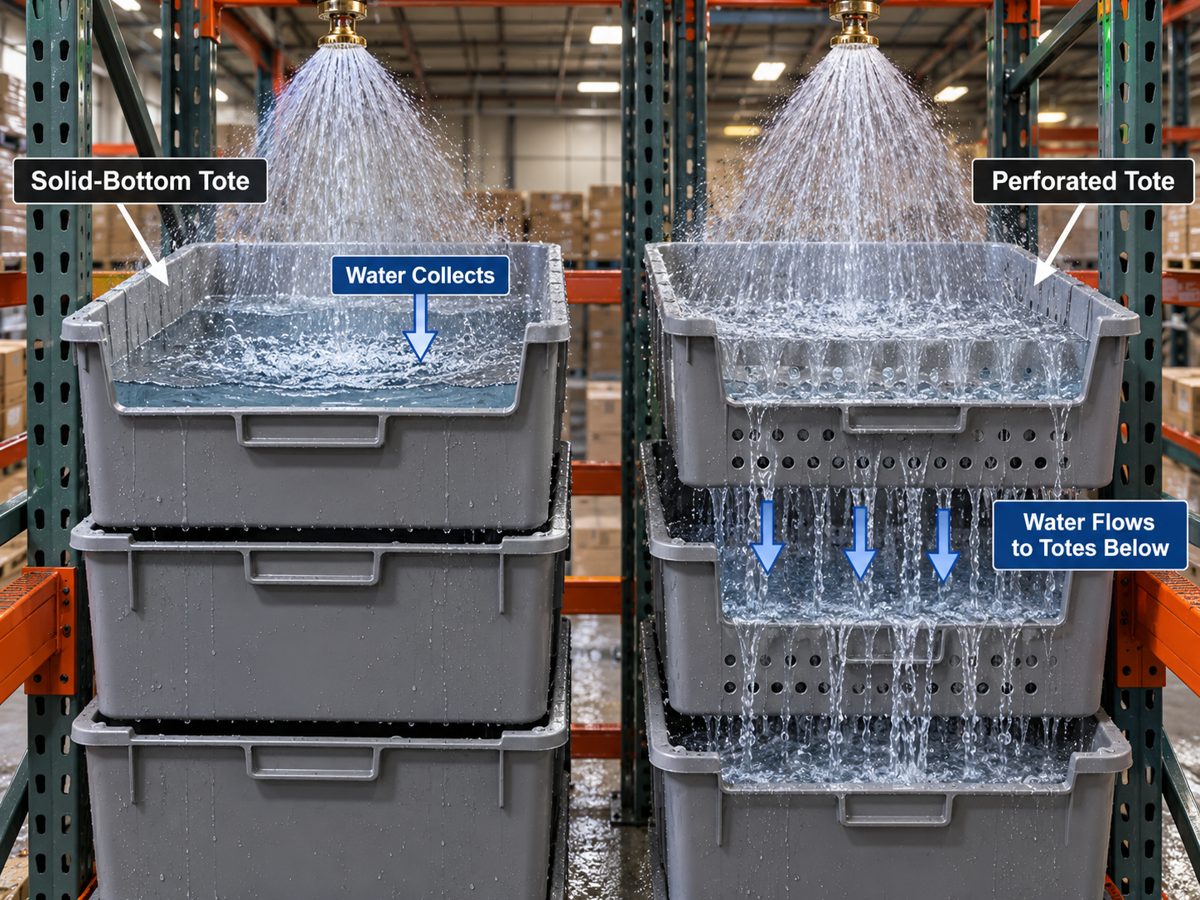
Perforated totes can let sprinkler water drain to lower levels instead of collecting in each tote. Hole size, spacing, nesting and tote contents all affect real water penetration, and perforations should not be assumed to justify reduced sprinkler criteria. Test evidence acceptable to the AHJ and the insurer is needed.
Which sprinkler types are used for ASRS protection?
The white paper compares six: ESFR, standard pendent (CMDA) and CMSA sprinklers at the ceiling, upright sprinklers on exposed overhead piping, in-rack sprinklers with guards inside the storage array, and shielded intermediate-level sprinklers at multiple storage elevations.
Who approves an ASRS fire protection design?
No single national organization does. The authority having jurisdiction, often a fire marshal or building official, approves permits, plans and acceptance tests under the codes the jurisdiction has adopted. The owner's insurer may add its own requirements, and a fire protection engineer develops the design.
What is the Attabotics Guardian Bin?
The Guardian Bin is the white paper's example of building fire protection into the storage container. It is designed to isolate and contain a fire at the source by limiting oxygen and reducing spread to adjacent storage locations, so suppression systems have more time to act.
Does this white paper replace a fire protection engineer?
No. It is an introduction to topics, classifications, containment methods and system design. Project-specific code analysis, fire protection engineering, AHJ approval and insurer acceptance are still required.
How do I get the white paper?
Click any download button on this page and the PDF opens directly. No form is required. Download the ASRS Fire Suppression white paper (PDF).